
Jujutsu Kaisen was the reason I booked a stay in Kitakami.
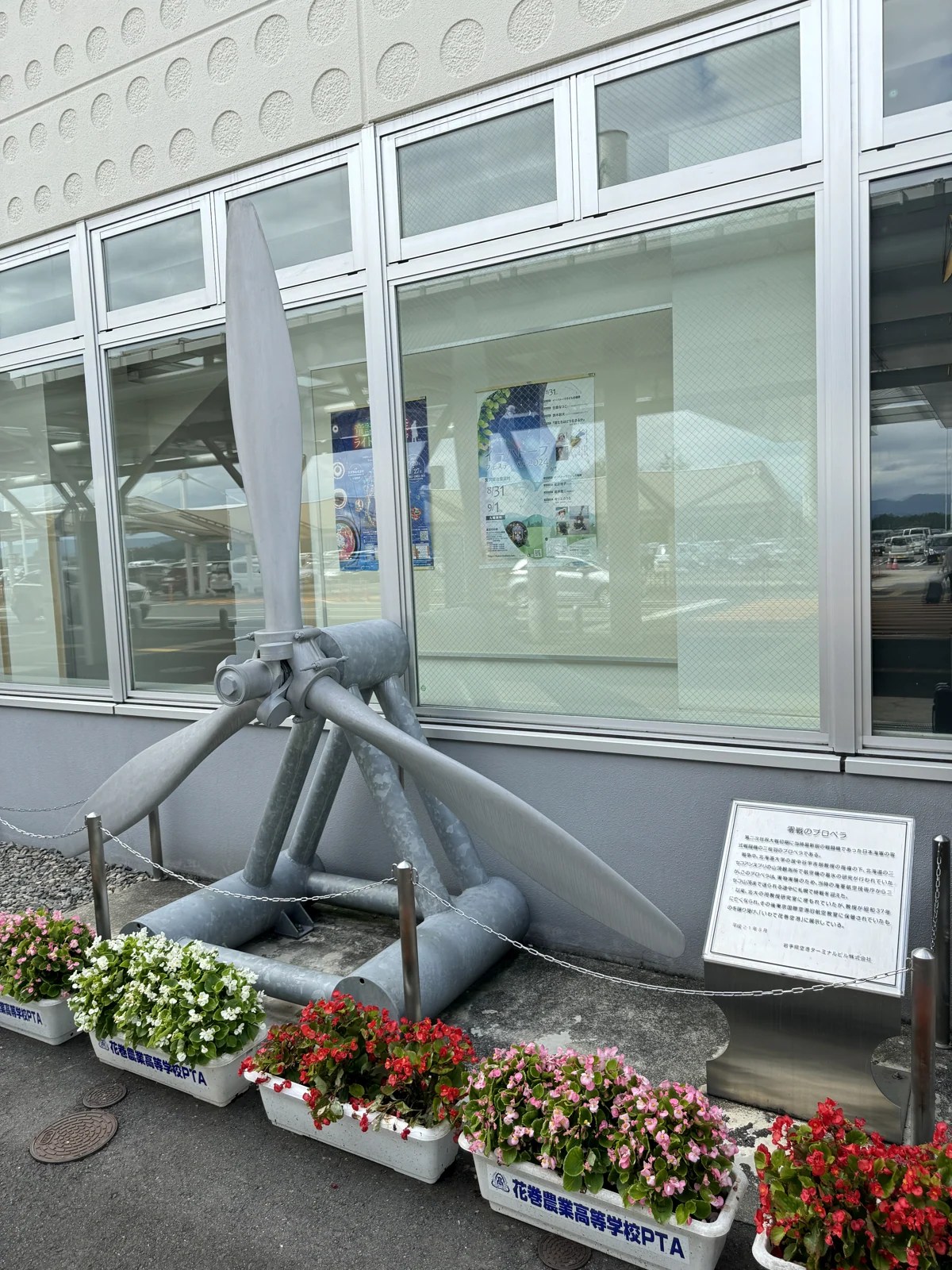
In early September I flew from the Kyoto area to Iwate Hanamaki Airport and spent two nights in southern Iwate, a prefecture in the Tohoku region of northern Honshu.
I ate yakiniku in Mizusawa, walked around Genbikei Gorge in Ichinoseki and visited Takkoku no Iwaya. This was a separate visit from my later road trip through Akita, Iwate and Miyagi.
Places in this travelogue
Hanamaki, Kitakami and Mizusawa: the start of the Iwate trip
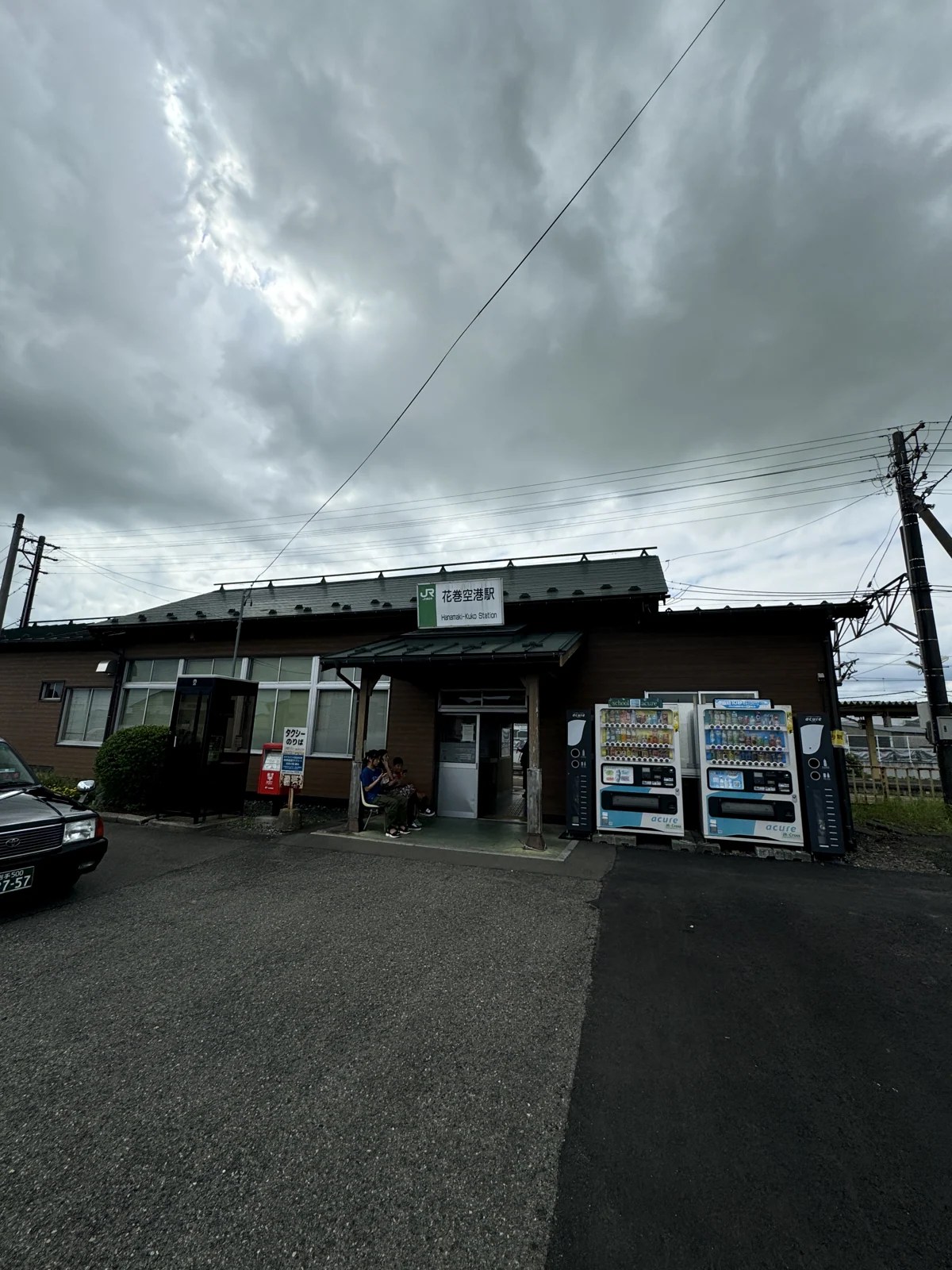
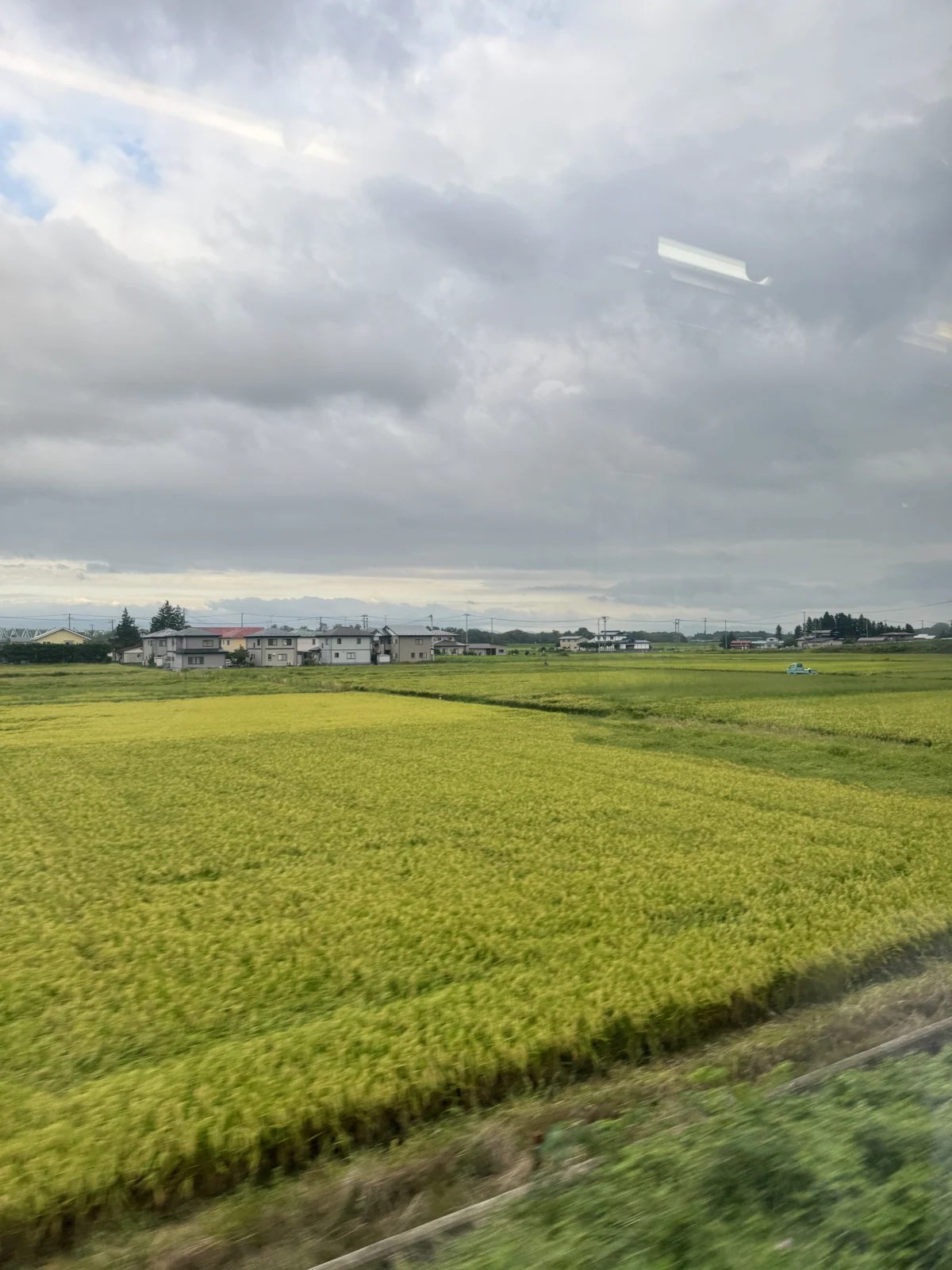
I took a bus from the airport to Hanamaki-Kuko Station, then travelled south by train. Rice fields spread out beyond the window, with houses and low mountains further away.
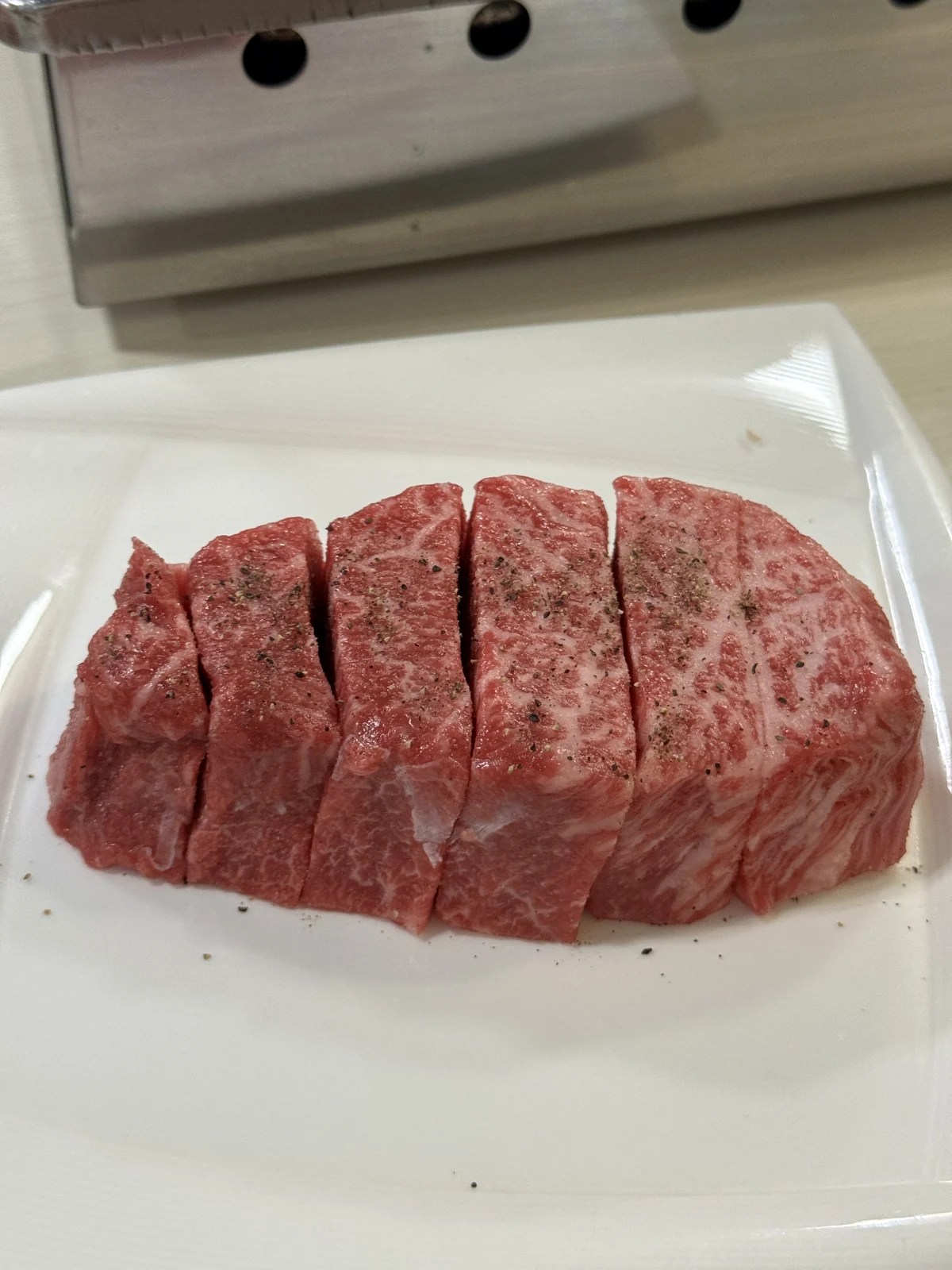
I based myself in Kitakami and went to Ryuen in Mizusawa for yakiniku, meat grilled at the table. The food here was genuinely delicious. I photographed plates of thickly cut meat, but looking back at them, it is the enjoyment of the meal that comes to mind first. Our order included tongue, short rib, skirt steak, offal and cold noodles.
Reservations at Ryuen can be difficult to secure. If you want to eat yakiniku in Mizusawa, it is worth enquiring when planning the trip rather than leaving it until the day. This is one of the meals from the visit I would particularly recommend.
A favourite series had helped determine where I would stay. The journey itself added other details: fields seen from a train and food shared around a table.
Genbikei Gorge and Kakko Dango: a gorge walk and flying dumplings
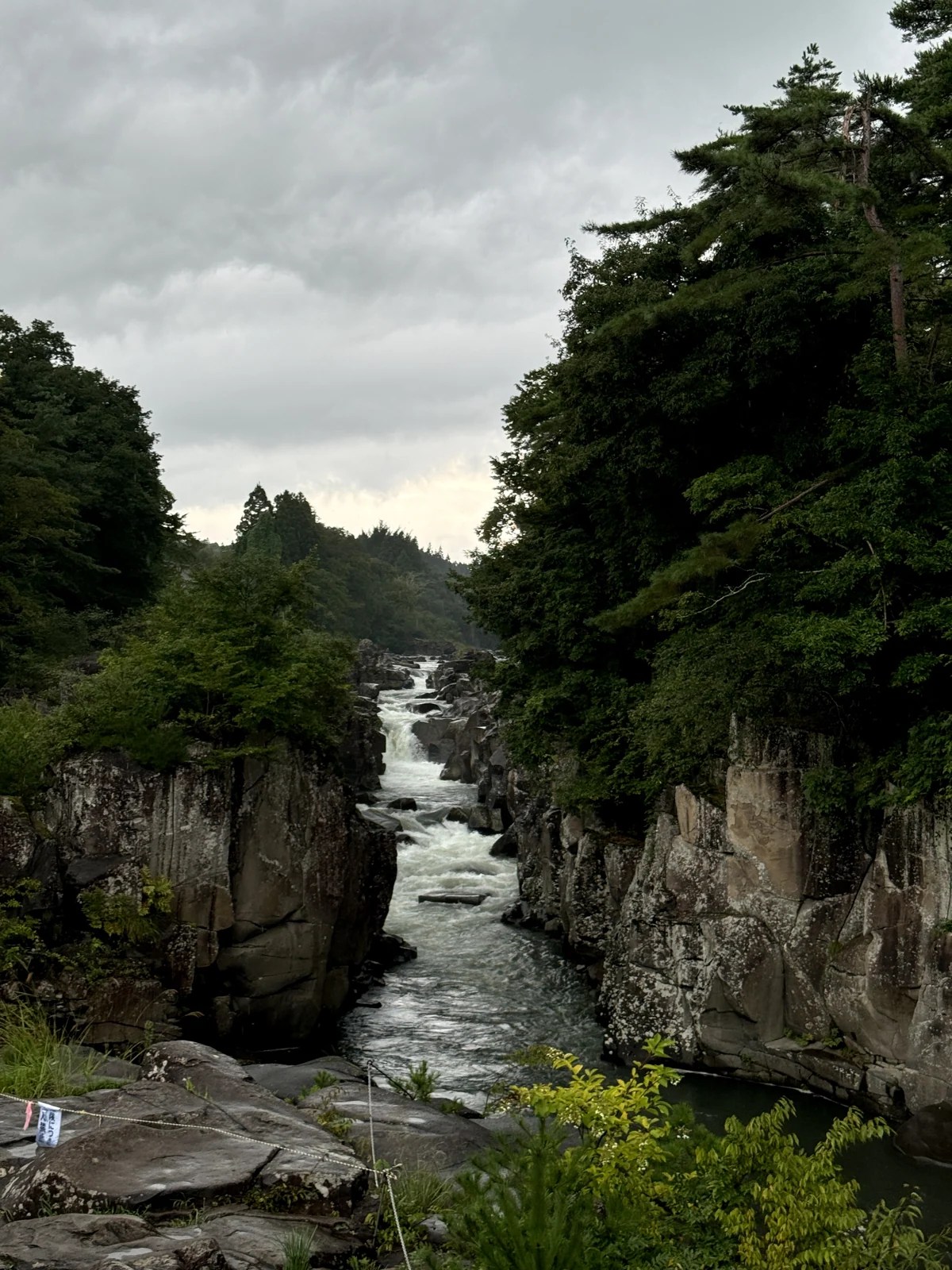
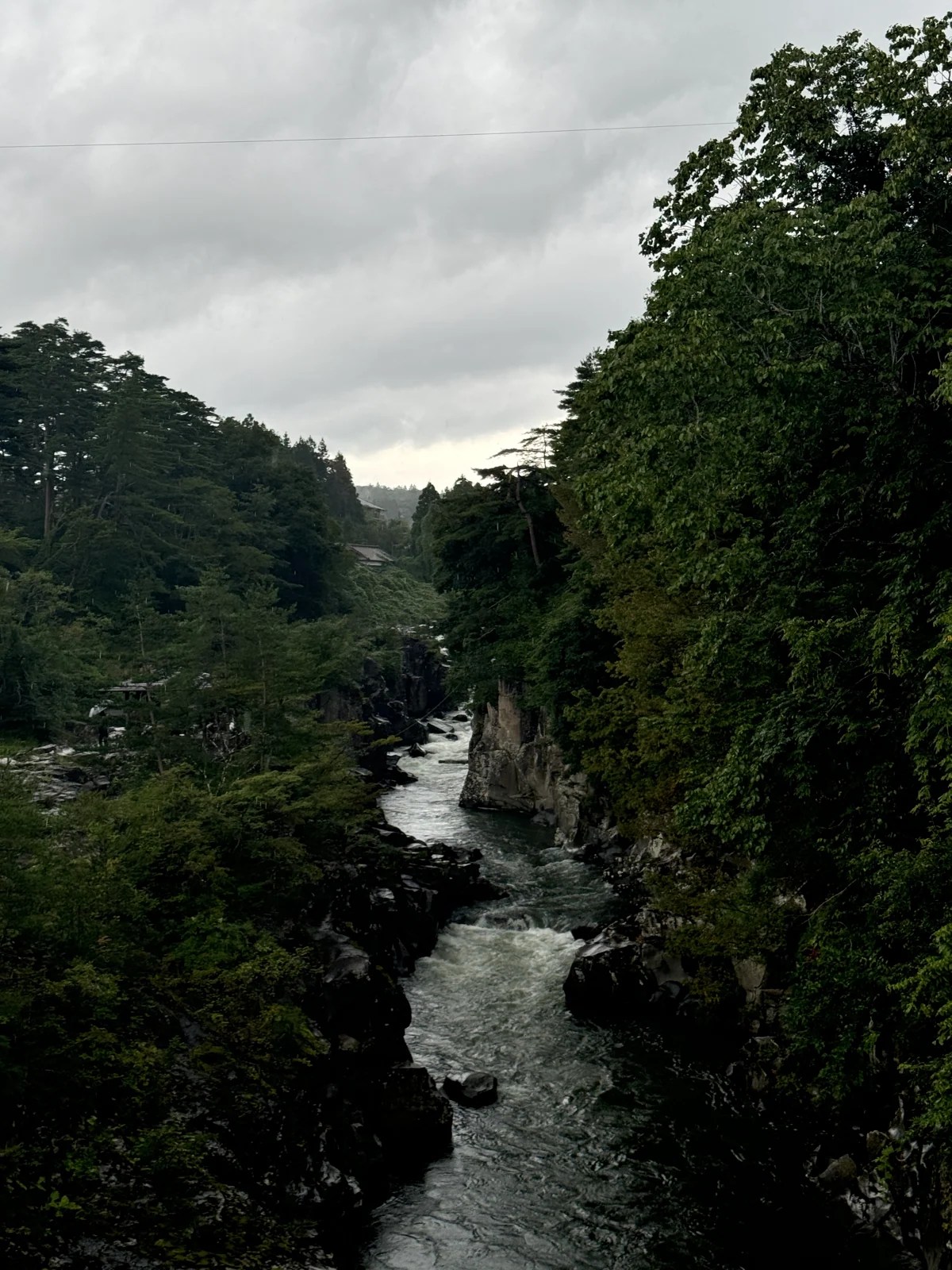
The next day I explored southern Iwate by car. After lunch at Ushi-ya Kakunoshin in Ichinoseki, I went to Genbikei Gorge. Water gathered between rocks before opening into broader pools. The shape of the river changed between the banks and the bridge.
The Iwai River, flowing from Mount Kurikoma, formed the gorge through erosion. Rock shapes and water changed with the viewpoint. Alongside looking at the scenery, I stopped for dango, rice dumplings served on skewers.
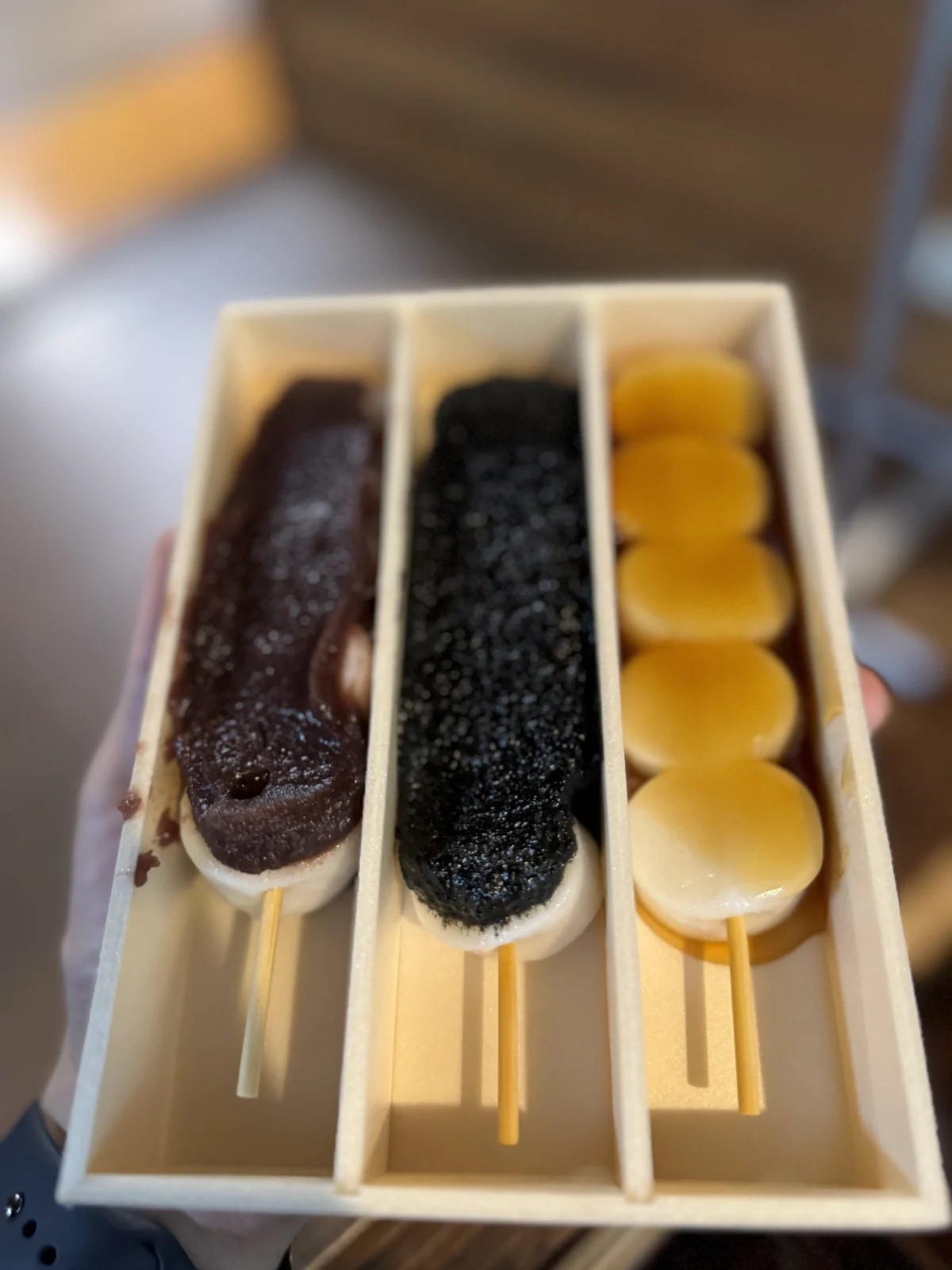
These were Kakko Dango from Kakkoya, a business dating to the Meiji period, with three skewers arranged in a box. A programme made on location explains the name through the founder’s skill at imitating a cuckoo. A person’s particular talent has become part of the place’s best-known food.
The other distinctive feature is the basket delivery across the gorge. Customers put money into a basket attached to a rope and signal with a wooden mallet; the shop sends back dumplings and tea. Iwate’s tourism account credits long experience with getting the tea across without spilling it. Behind the nickname “flying dumplings” is a very practical human skill.
A rope carrying food makes the far bank part of the experience rather than simply a distant view. The exchange between people belongs to the landscape. That is what I find appealing about this local speciality.
After the dumplings I looked back towards the water. My photographs contain the three skewers, the river among the rocks and a suspension bridge. They remain parts of the same stop, rather than separate memories of food and scenery.
Takkoku no Iwaya Bishamondo: visiting the hall beneath the cliff
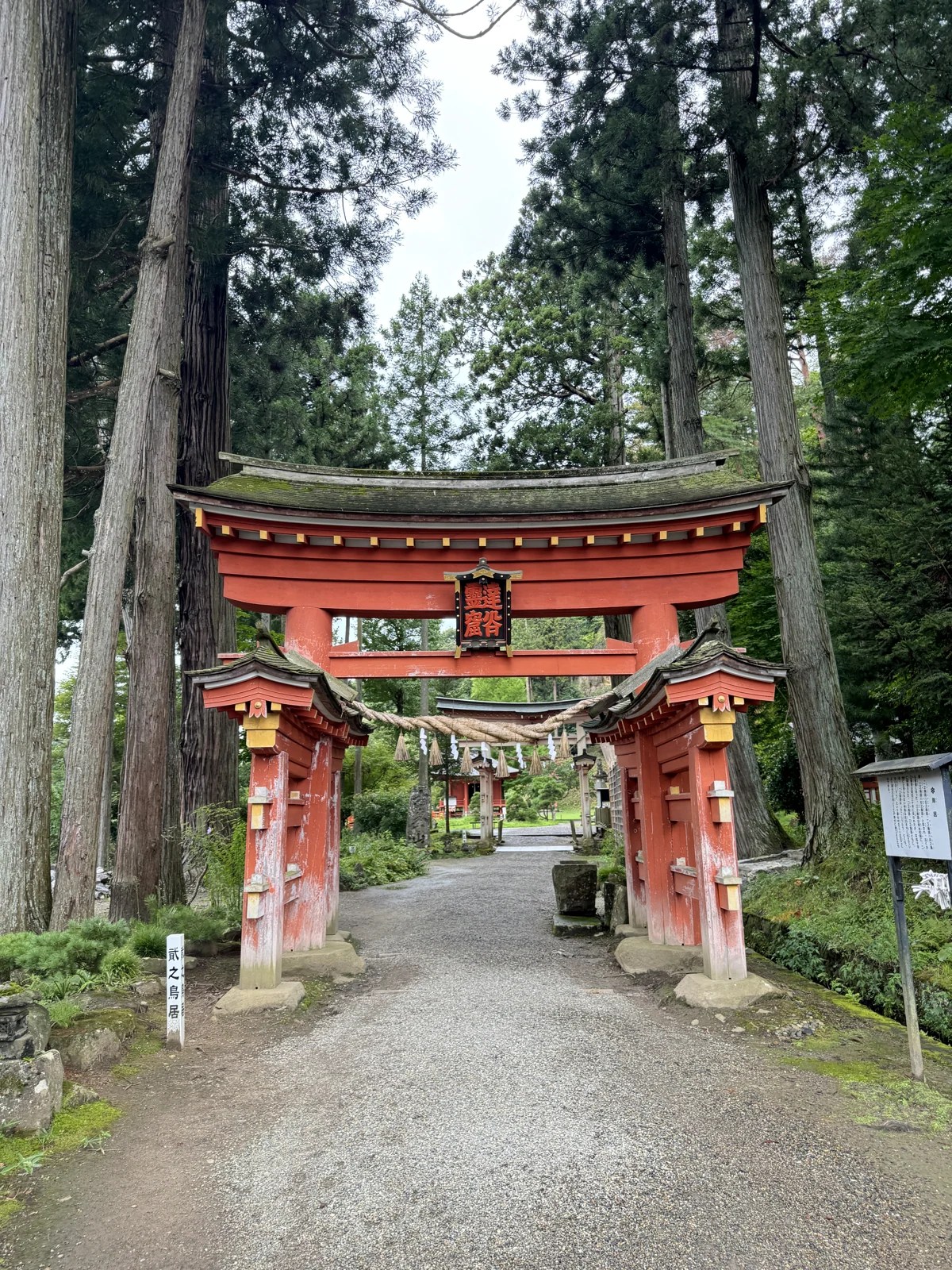
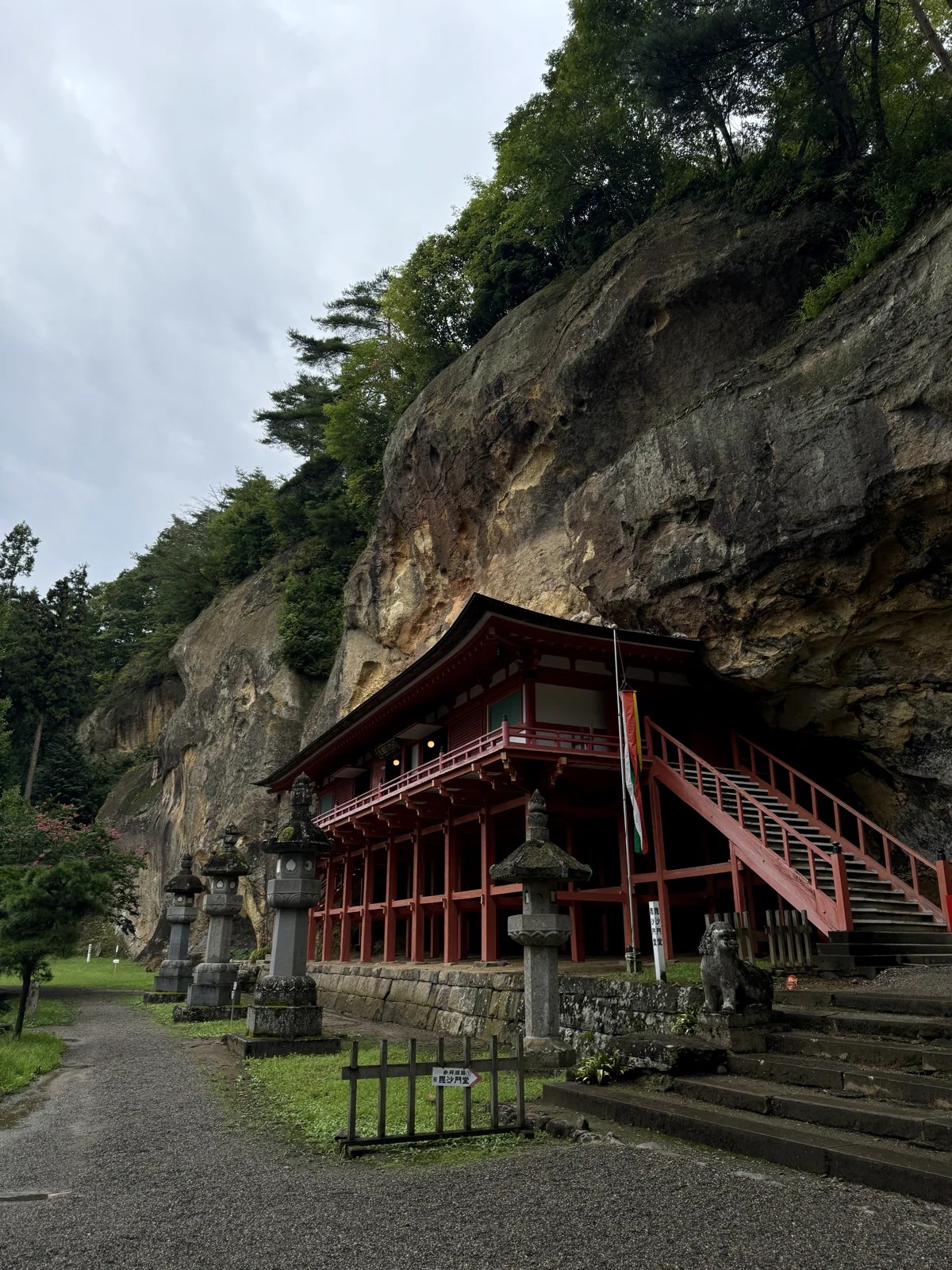
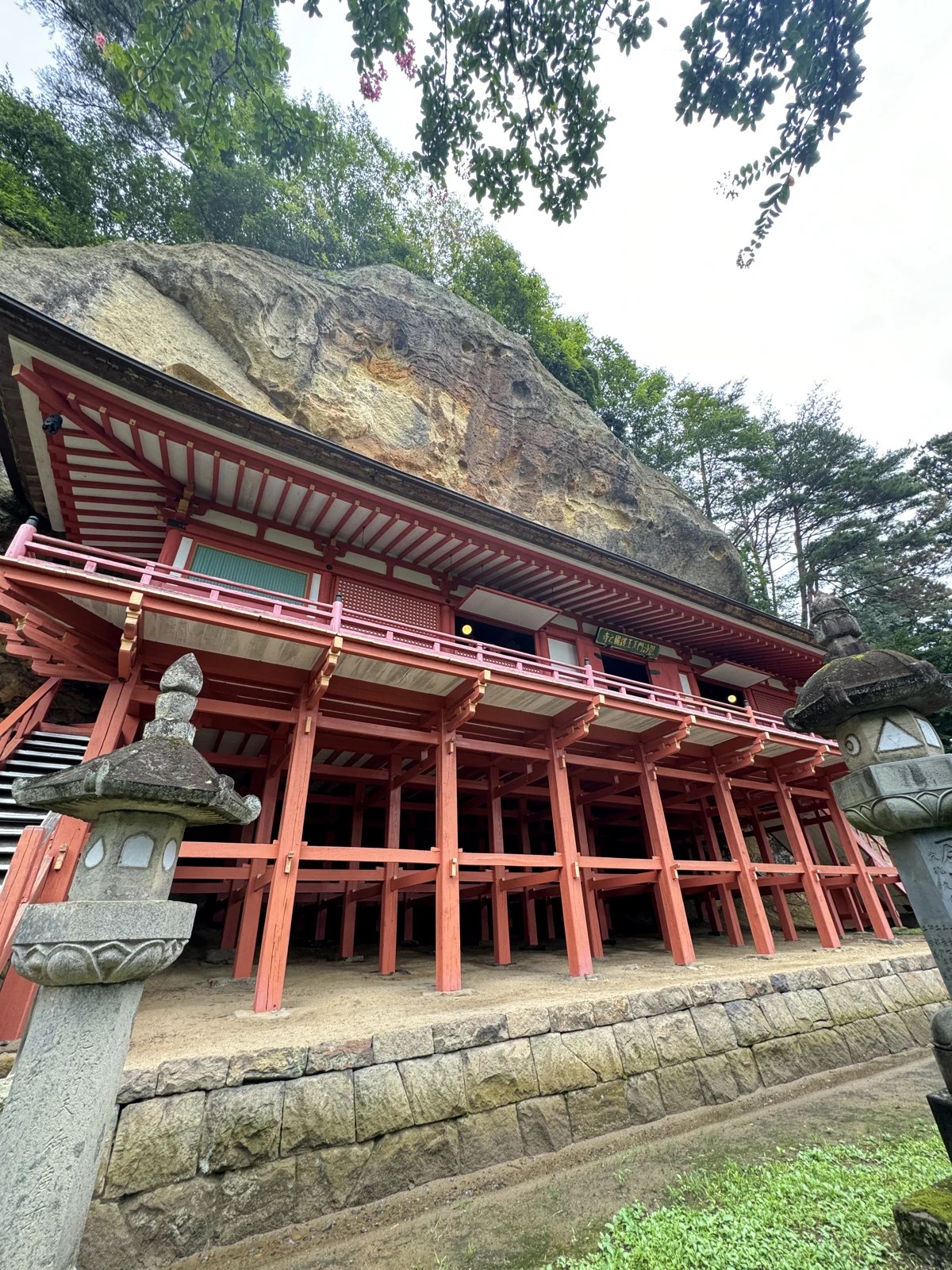
From Genbikei I went to Takkoku no Iwaya Bishamondo in Hiraizumi. Beyond the torii gates, a vermilion hall stood beneath a cliff, with rock close above the roof. The building and its setting are inseparable.
Temple tradition says that Sakanoue no Tamuramaro founded the hall in 801 in gratitude to Bishamonten, a Buddhist guardian deity, after a military victory. It describes a design inspired by the platform at Kyoto’s Kiyomizu-dera and the enshrinement of 108 images of Bishamonten. Having travelled from Kyoto to Iwate, I encountered Kyoto again in this account.
The foundation story and dated historical evidence are distinct. The temple identifies an entry for 1189 in Azuma Kagami, a medieval chronicle, as the earliest record of the site. I read its account of defeating Akuro-o and his followers as a tradition associated with this place, rather than a straightforward description of the people of northeastern Japan.
The present hall has not stood untouched since the beginning. Date Masamune rebuilt it in 1615; that building was lost to fire in 1946. The current hall dates from 1961 and is counted by the temple as the fifth. Against the apparent permanence of the cliff is a history of wooden buildings repeatedly replaced.
The torii gates stand before a Buddhist hall. Takkoku Seiko-ji, which cares for the site, describes an enduring sacred setting involving both Buddhist and kami worship. A rigid distinction between a shrine gate and a temple building would miss something here.
At Genbikei I had looked at the ways water shaped rock. Here I thought about people placing a building beneath it and sustaining a place of worship. The two rock landscapes were part of the same day, but drew my attention in different directions.
Kitakami: dinner before departing by Shinkansen
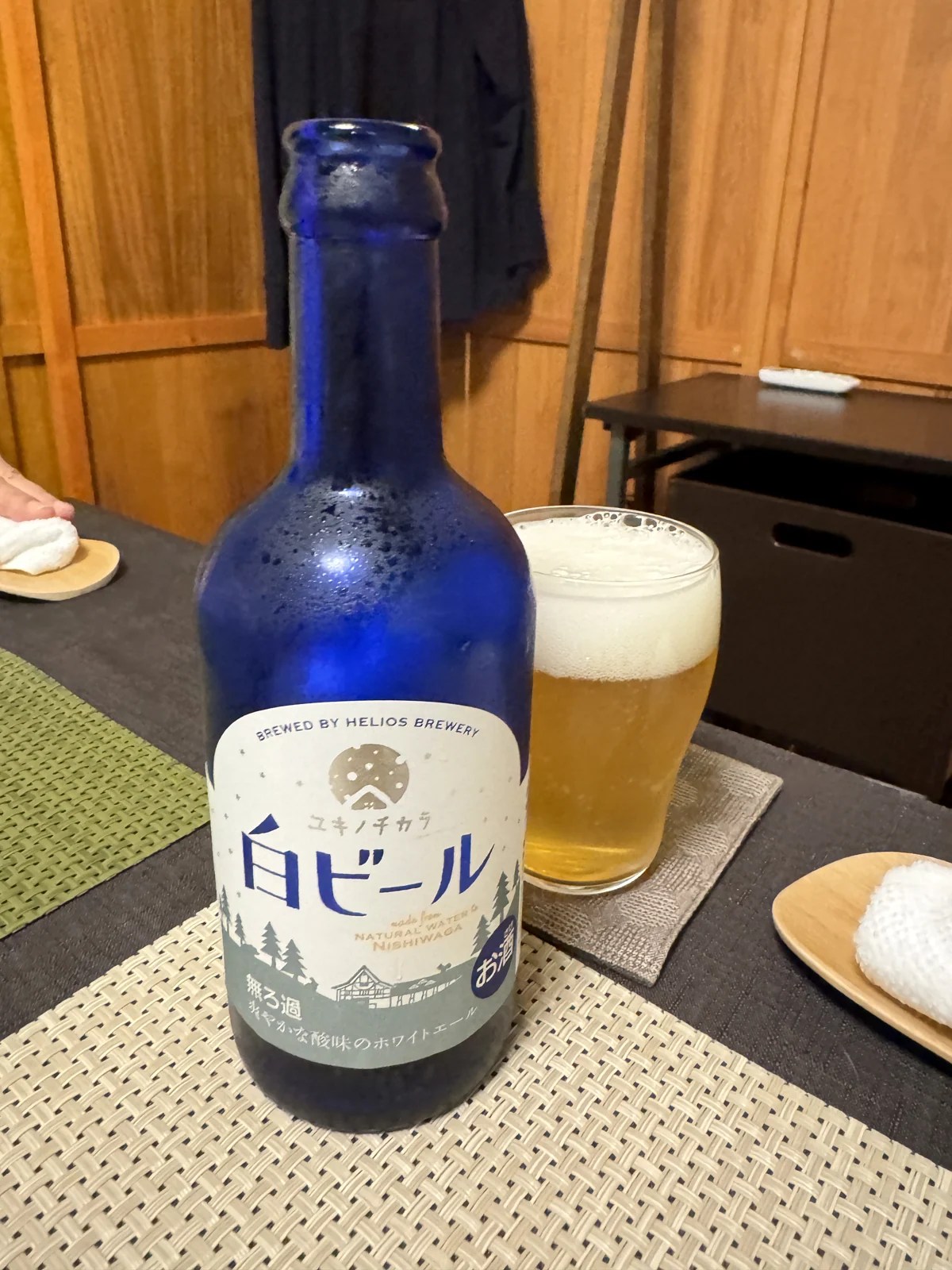
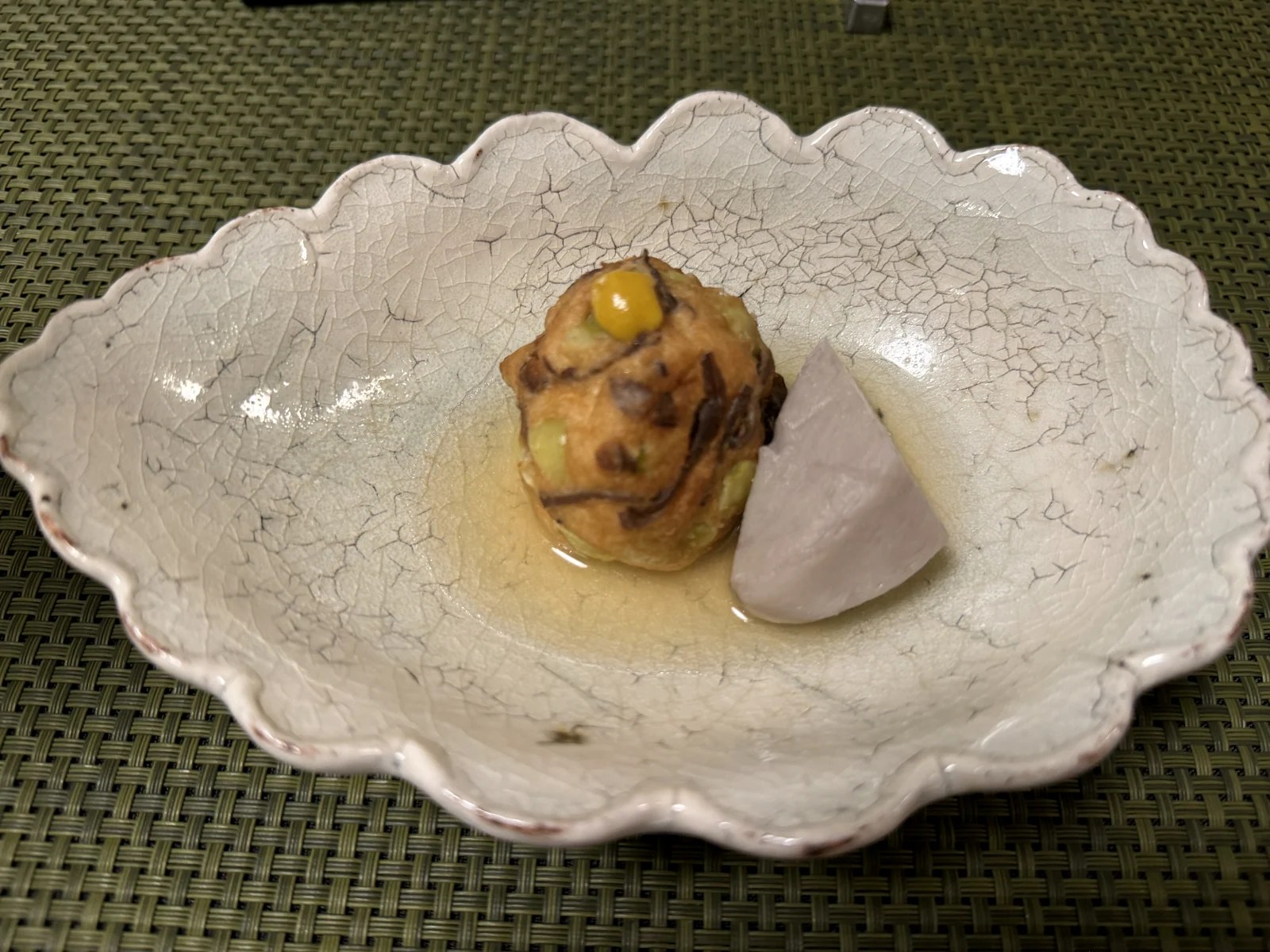
Back in Kitakami, I sat down for dinner. The photographs show a blue bottle of wheat beer, dishes in small bowls, and courses arriving on individual plates.
Each dish came on a different plate or in a different bowl. After a day at the gorge and the cliff-side hall, I sat down for dinner.
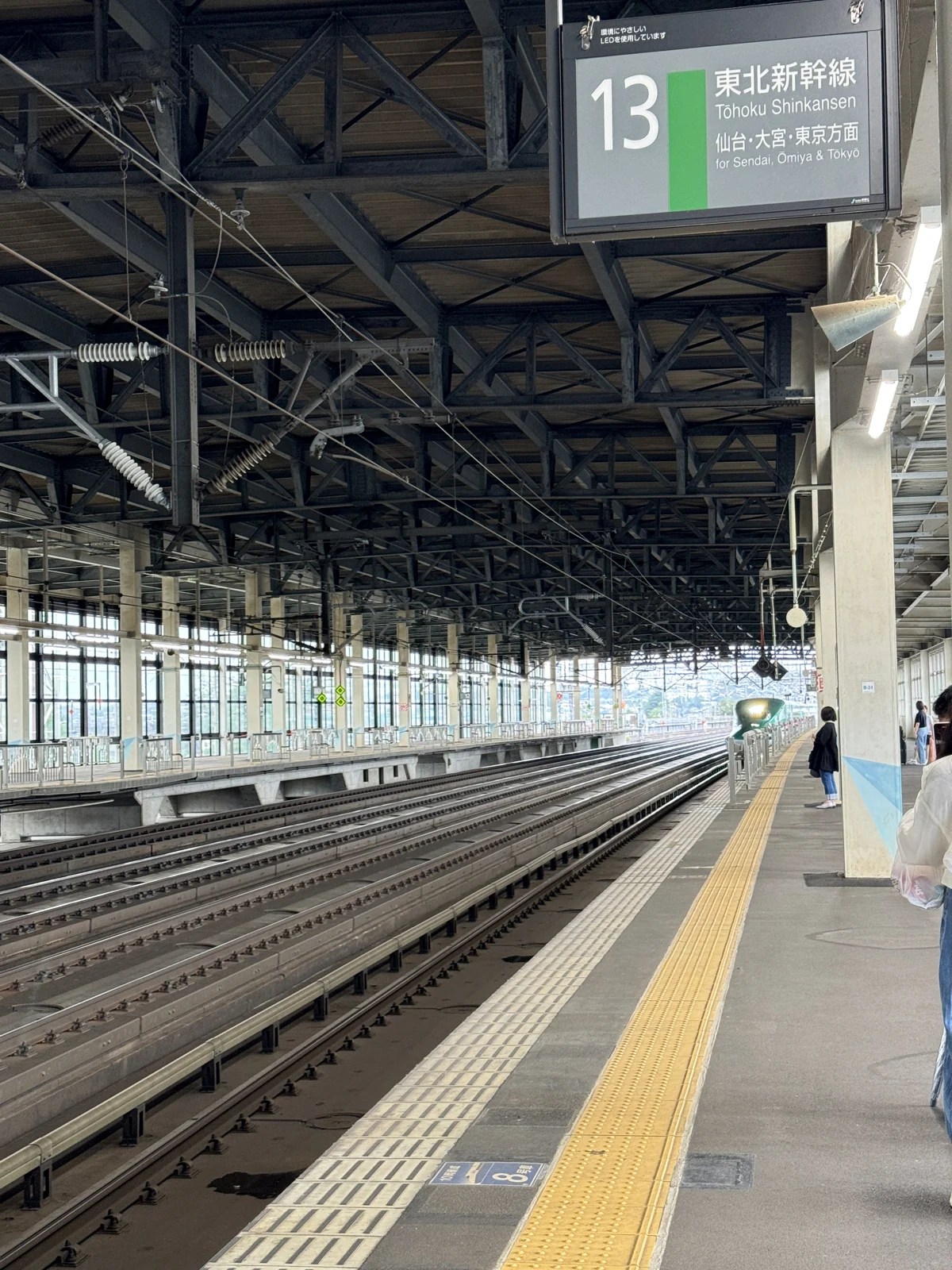
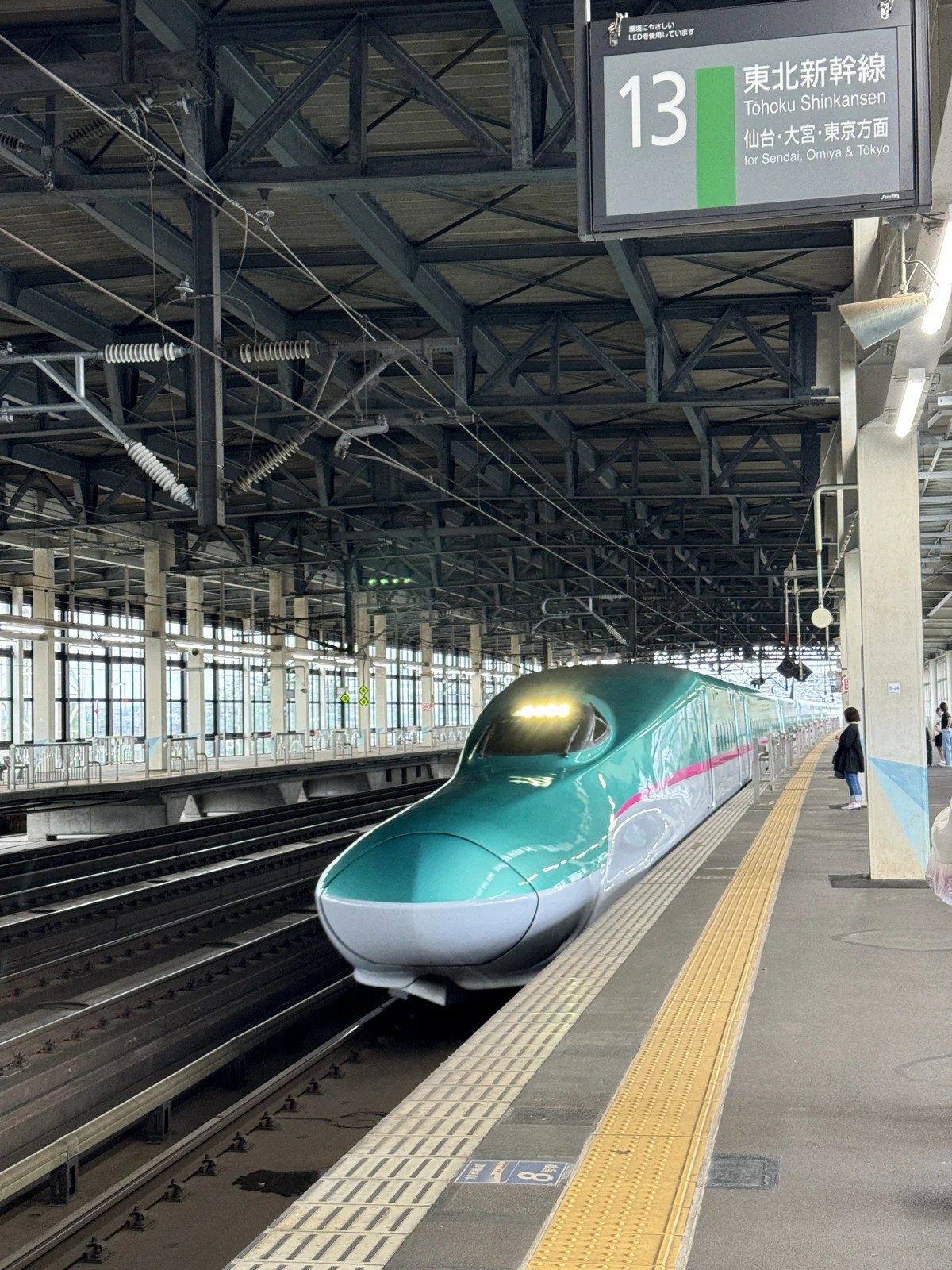
The next day I took the shinkansen from Kitakami Station. I photographed the green train arriving at the platform, then the rice fields beyond the window. A stay prompted by Jujutsu Kaisen had become two nights of rivers, rock faces and meals around southern Iwate.
Where I stayed
| Hotel | Nights | Amount and conditions |
|---|---|---|
| Toyoko Inn Kitakami Station Shinkansen Exit | 2 nights | JPY 21,160 (≈ €119.00 / US$133.91) paid: JPY 20,160 accommodation plus JPY 1,000 extension charge. |
EUR and USD amounts are approximate reference conversions using ECB rates of 16 October 2026: €1 = JPY 177.82 = US$1.1253. They do not show the exchange rate paid during the 2024 trip; card fees are excluded.
Recommended restaurants
Restaurants and bars visited on this trip.
| Place | Why choose it | Bill · JPY / EUR / USD |
|---|---|---|
| Ryuen, Mizusawa | The yakiniku here was genuinely delicious. Our order included tongue, short rib, skirt steak and cold noodles. Reservations can be hard to secure, so enquire while planning a visit to Mizusawa. | JPY 41,450 ≈ €233.10 US$262.31 |
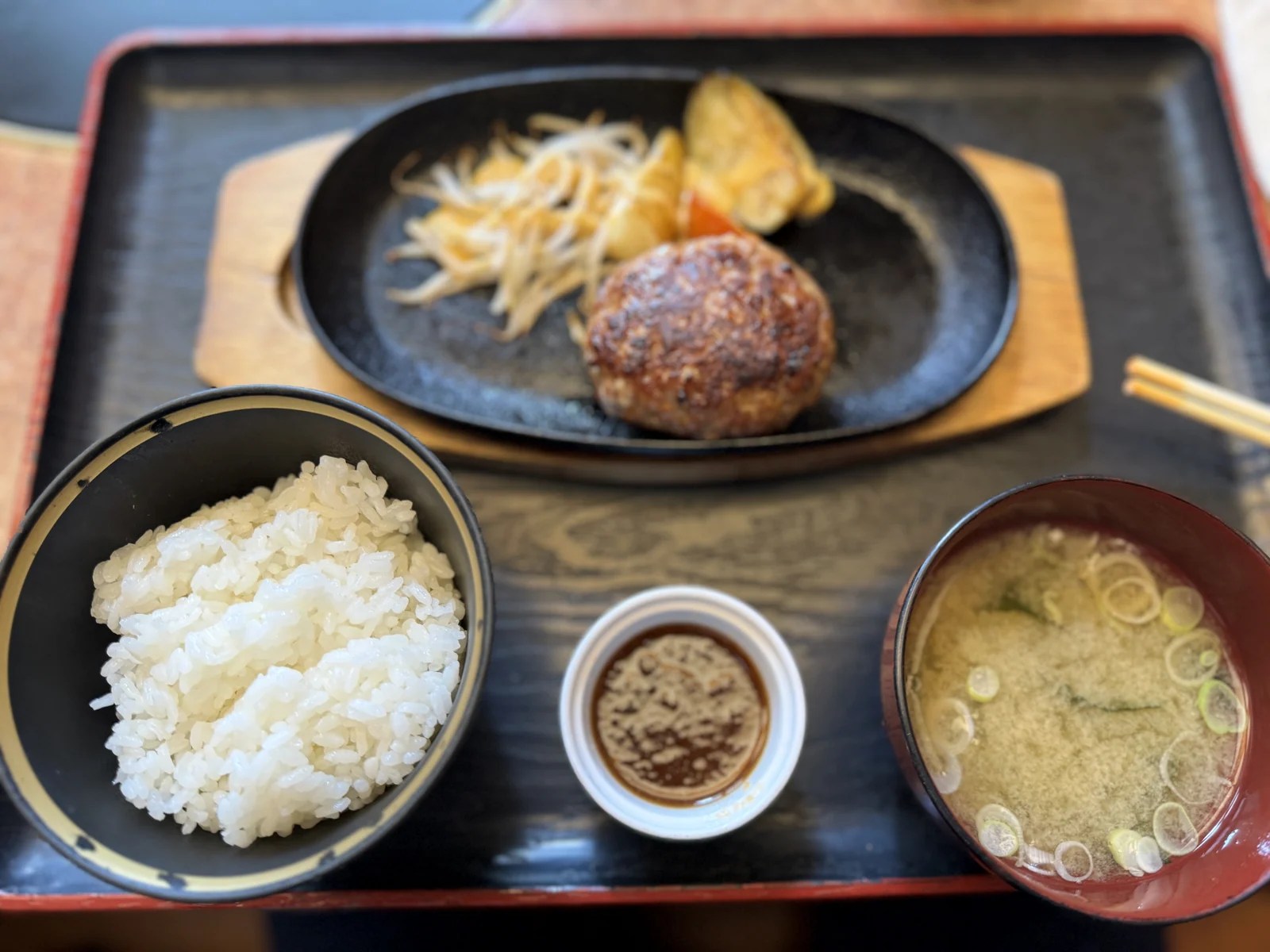
| Ushi-ya Kakunoshin, Ichinoseki | For a meat-based lunch with rice and soup on a drive in the Ichinoseki area. | JPY 4,800 ≈ €26.99 US$30.38 |
| Oryori Terasawa, Kitakami | An option when considering a Japanese dinner in Kitakami. | JPY 66,220 ≈ €372.40 US$419.06 |
Sources
- Genbikei Gorge: Ichinoseki tourism
- Takkoku no Iwaya: Hiraizumi Tourism Association
- Kakko Dango: Ichinoseki tourism
- Kakko Dango: Iwate Tourism Association
- Kakko Dango: Nippon TV location report
- Bishamondo: temple foundation account
- Takkoku no Iwaya and Tamuramaro worship
Background sources checked 19 October 2026. This account concerns the 2024 visit. Check official sites for current visiting conditions.