
In Kagoshima, Sakurajima was there beyond the city, and again beyond a garden.
Ryotaro Shiba’s historical novel Tobu ga Gotoku, and his other books, had drawn me towards Satsuma, the domain centred on present-day Kagoshima in southern Kyushu. I wanted to see where Saigo Takamori and Okubo Toshimichi had grown up, and to put the places in their story into perspective.
Over two nights in late August, I walked through Kajiyacho and Shiroyama, travelled to Kirishima Jingu shrine and looked across to Sakurajima from Sengan-en. The journey followed my interest in Satsuma’s history; among the meals, torisashi, chicken served as sashimi, made a particular impression.
Places in this travelogue
Kajiyacho and the Museum of the Meiji Restoration: exploring Satsuma’s history
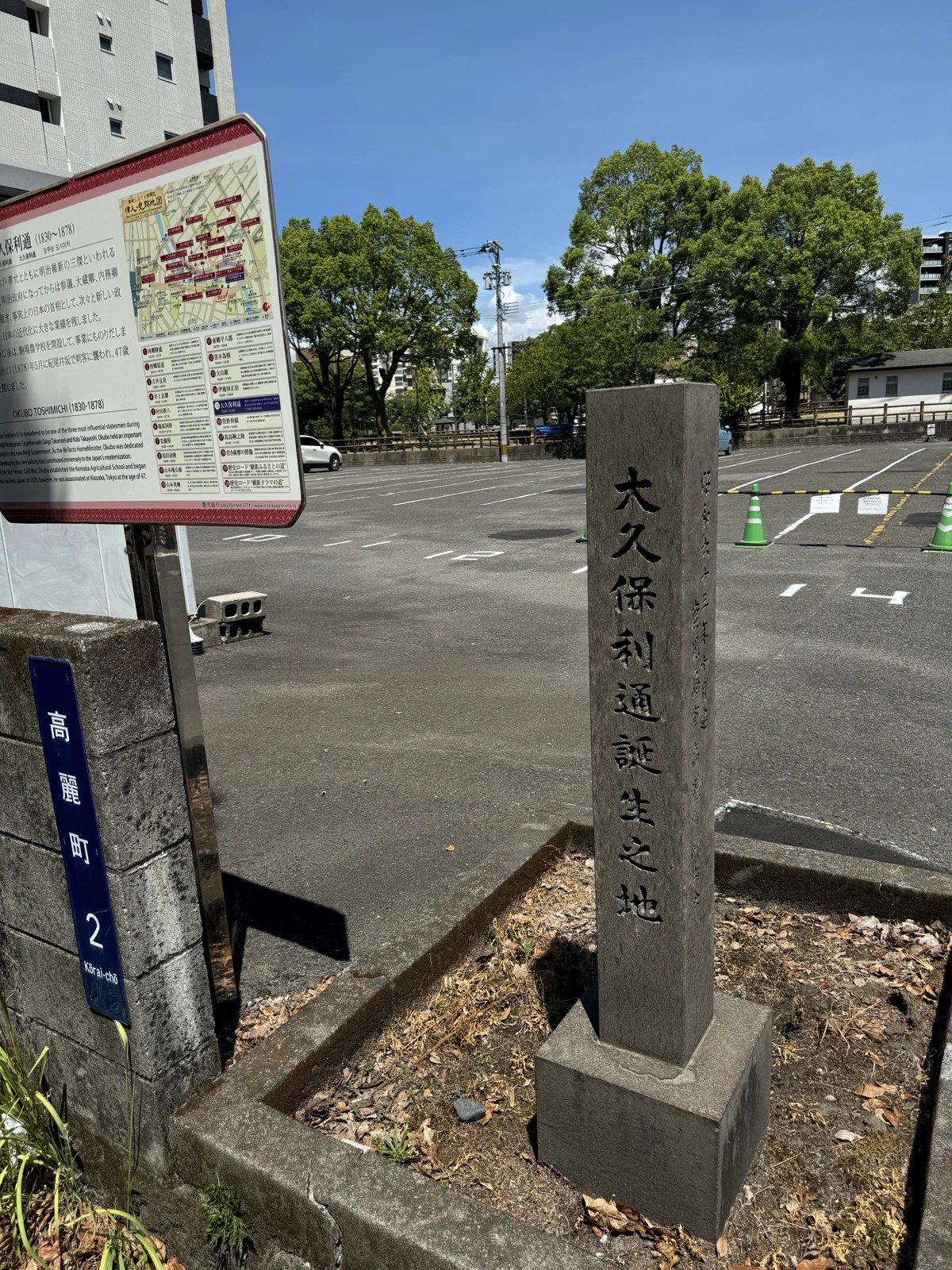
In Kajiyacho, Saigo Takamori and Okubo Toshimichi appeared on stone markers and information boards. The places where figures from Tobu ga Gotoku had grown up were within walking distance of one another. I also went inside the Museum of the Meiji Restoration beside the river.
One useful detail about Satsuma is goju education. Samurai boys learnt in neighbourhood groups of different ages, with older members teaching younger ones academic subjects and martial skills. Education took place through local relationships as well as formal institutions.
It is easy to read about prominent individuals as though they emerged alone. This system brings their surroundings into the picture: the people who taught them, and those with whom they competed. Walking between the markers in Kajiyacho gives that network a physical scale.
Saigo and Okubo helped establish the new Meiji government, yet their paths later diverged. Saigo returned to Kagoshima after leaving central government and eventually fought against government forces in the Satsuma Rebellion. That division is part of what interests me about Satsuma. A shared background did not produce a shared ending.
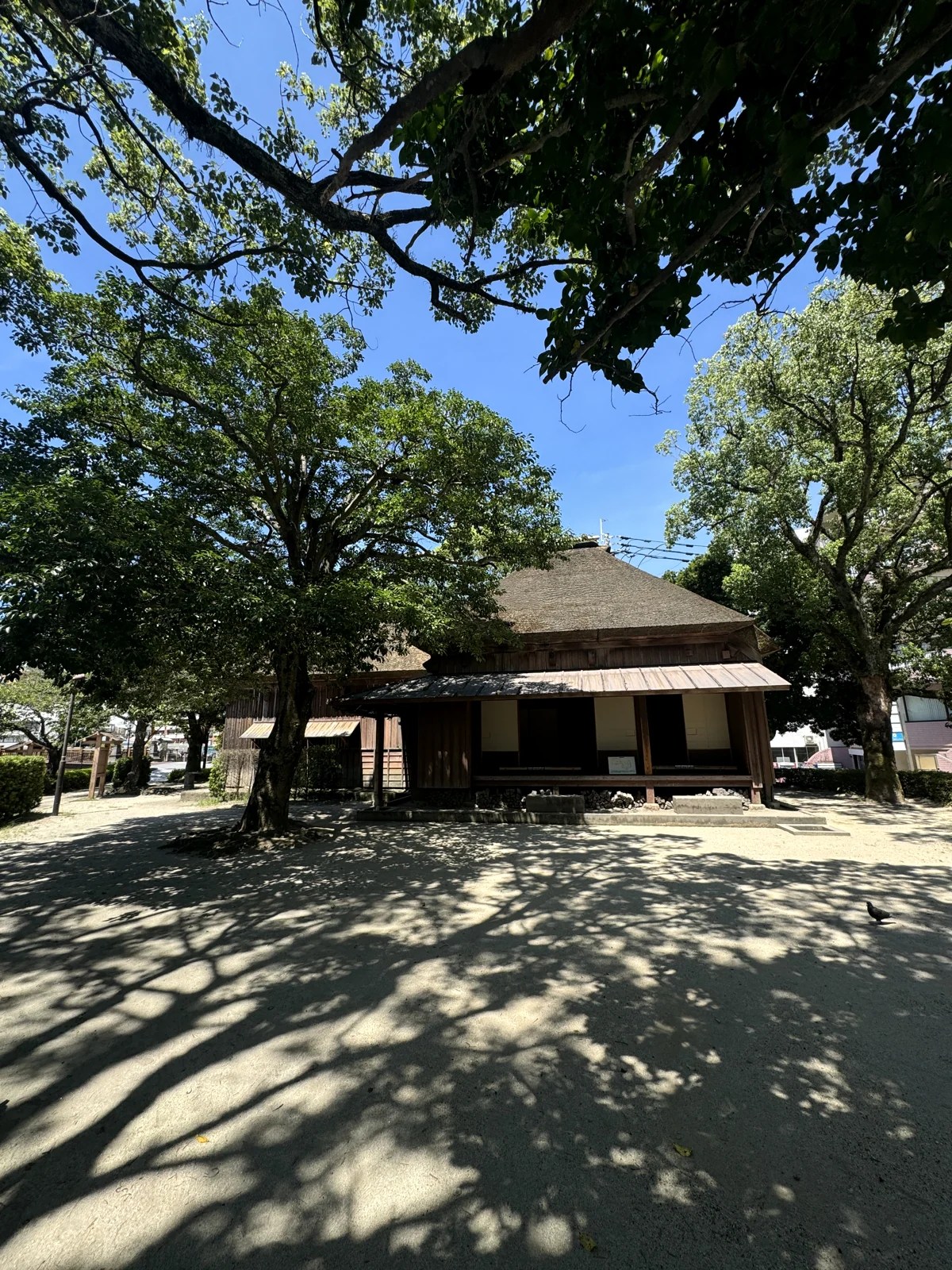
Outside the museum were the river paths and trees again. For all its famous names, this had also been a place of everyday life. Walking here gives me another way to think about the political history I had read.
Shiroyama and Reimeikan: views of Sakurajima and Saigo’s story
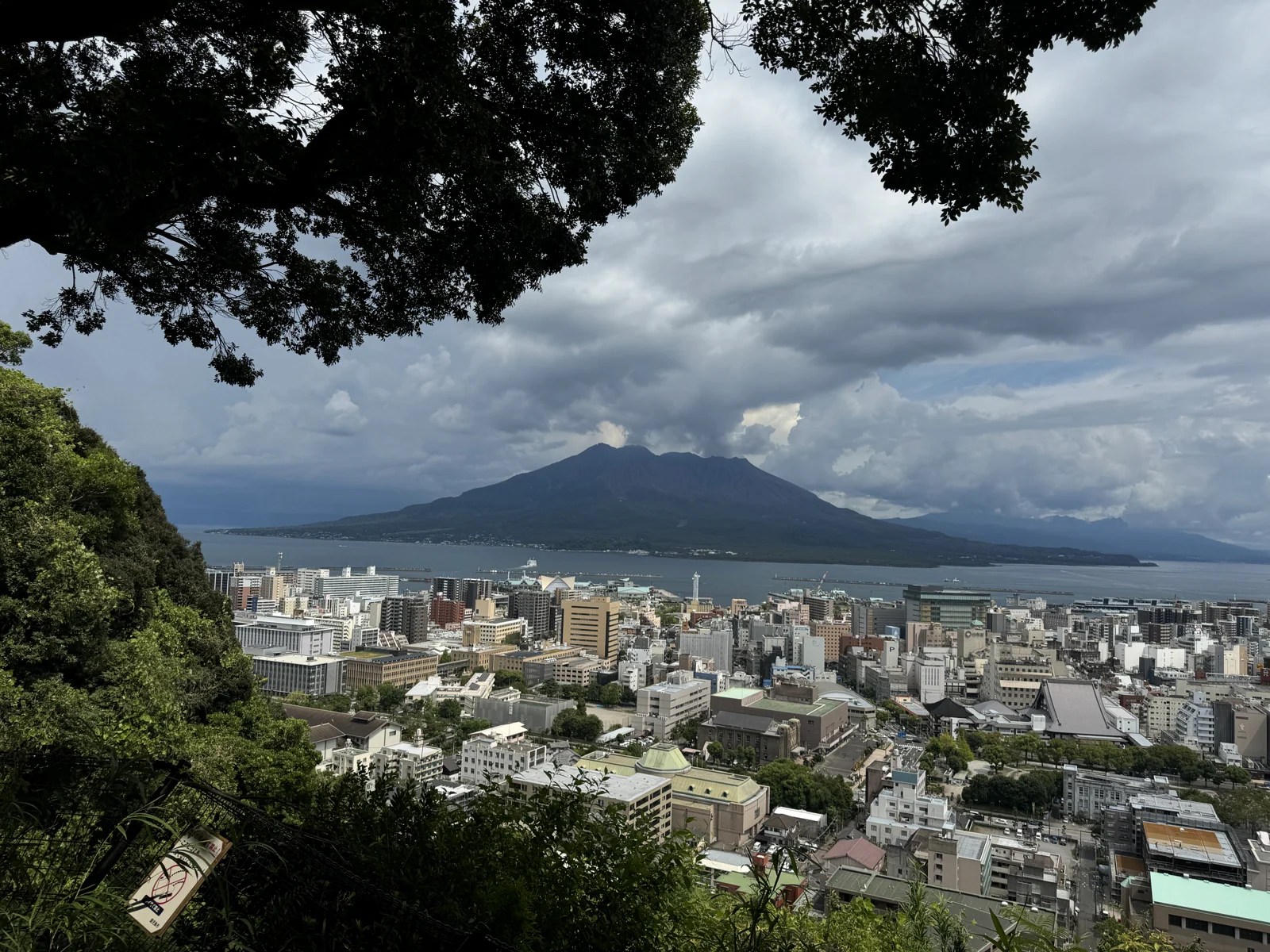
From Shiroyama I could see the city, Kinko Bay and Sakurajima beyond. Buildings filled the foreground, with the water further away. Even as a viewpoint, it is a useful place to understand Kagoshima’s geography.
It was also the final battlefield of the Satsuma Rebellion. After campaigning across Kyushu, Saigo and his followers returned to Kagoshima in 1877 and held out on this hill. The fighting ended on 24 September with Saigo’s death. A leading figure in the Meiji Restoration had become an opponent of the government he helped create, and met his end in his home city.
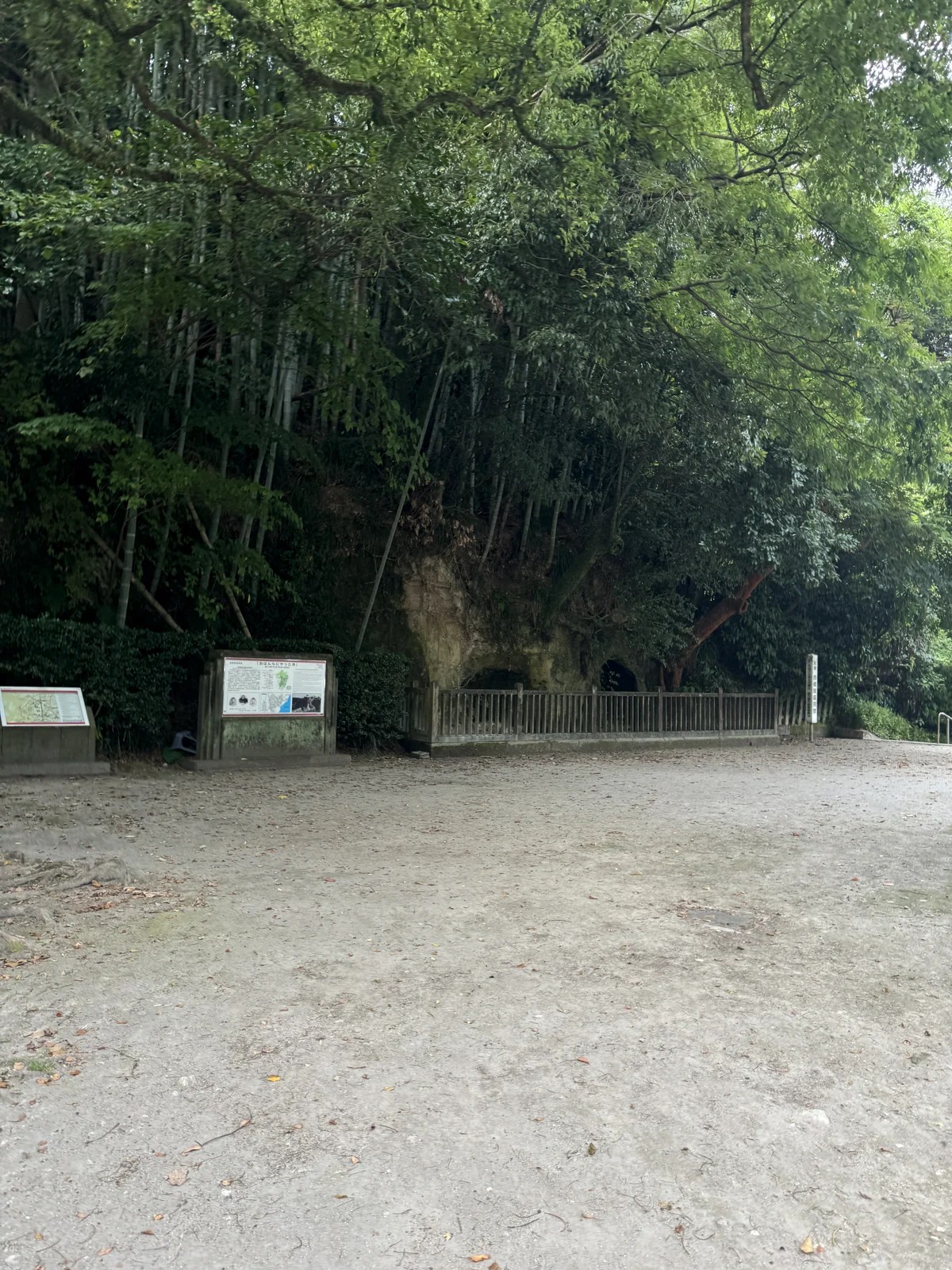
I stopped at Saigo’s cave, where he is said to have spent his last five days with Kirino Toshiaki and other leaders. The man who had helped bring a new government into being was now pursued by it. That change in his life has a very specific location here.
The view is open, yet this was a place to which an army had retreated. Looking back at the city and sea in my photographs, I find that contrast difficult to ignore. Being able to see a long way is different from being able to leave.
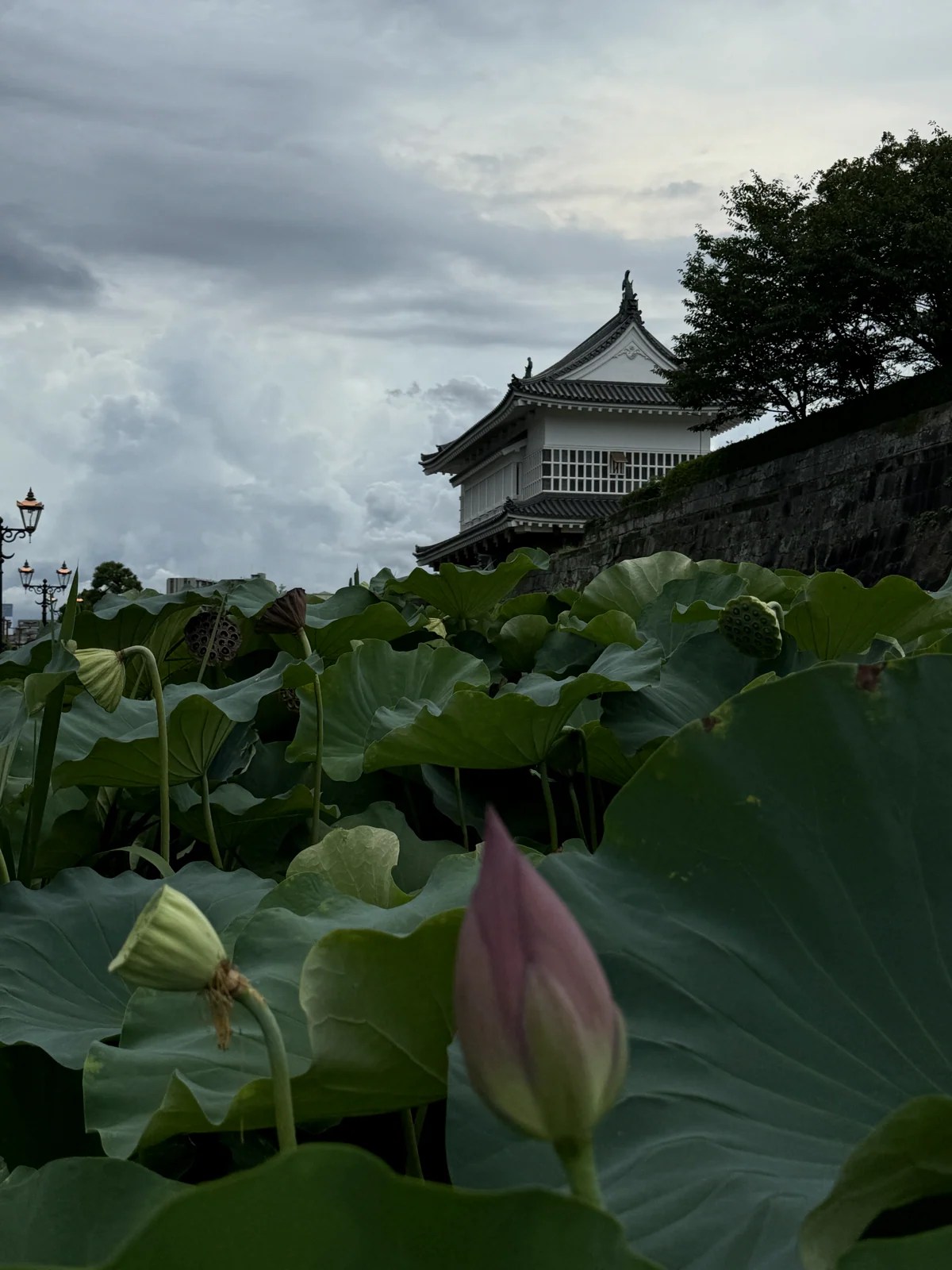
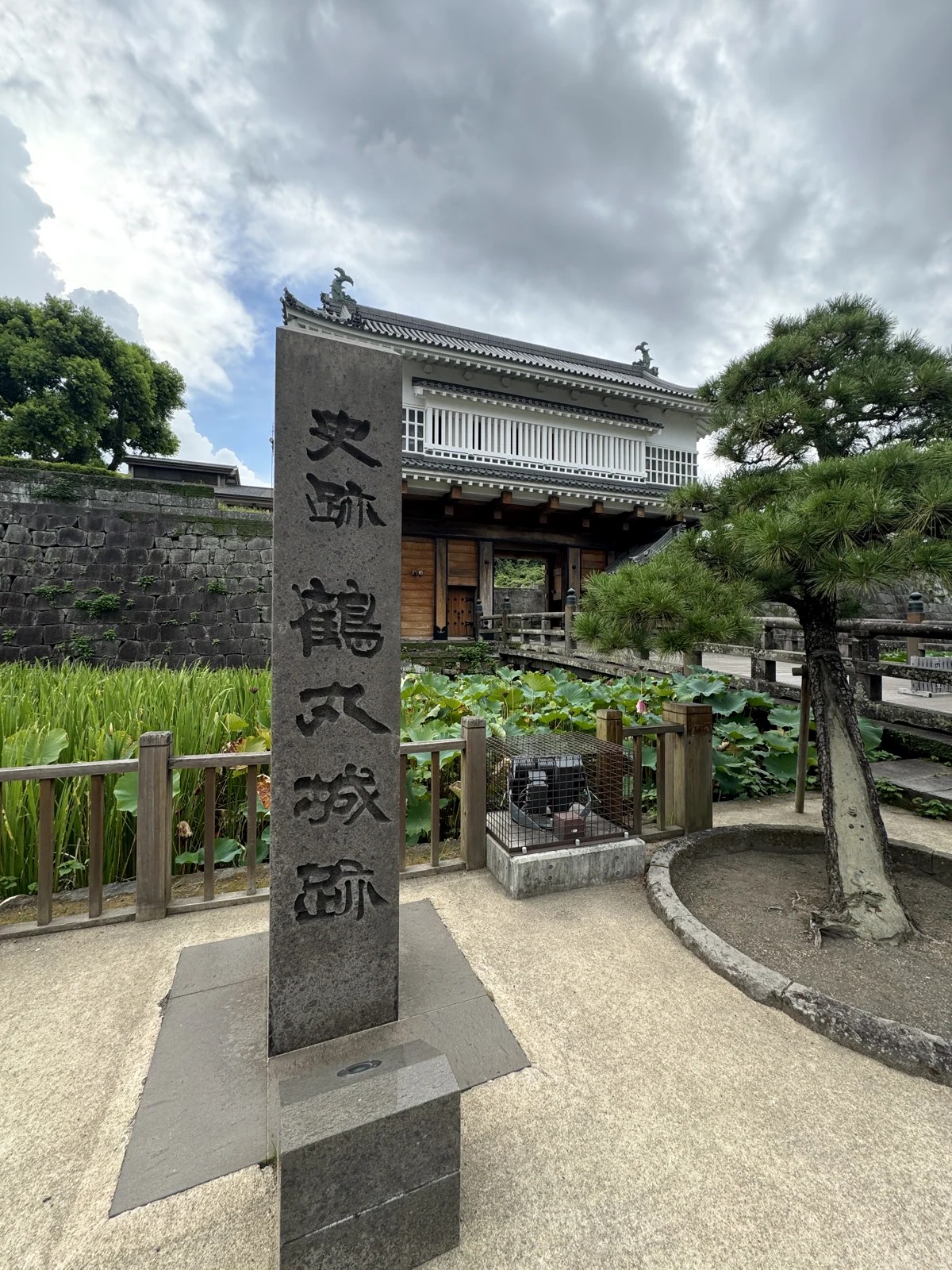
Back below the hill, lotus leaves covered the moat at Tsurumaru Castle. I passed through Goro-mon gate and visited Reimeikan, with its displays of writing, clothing and ceramics. The wider history of Satsuma gives context to the final events at Shiroyama.
Kirishima Jingu: a shrine surrounded by forest
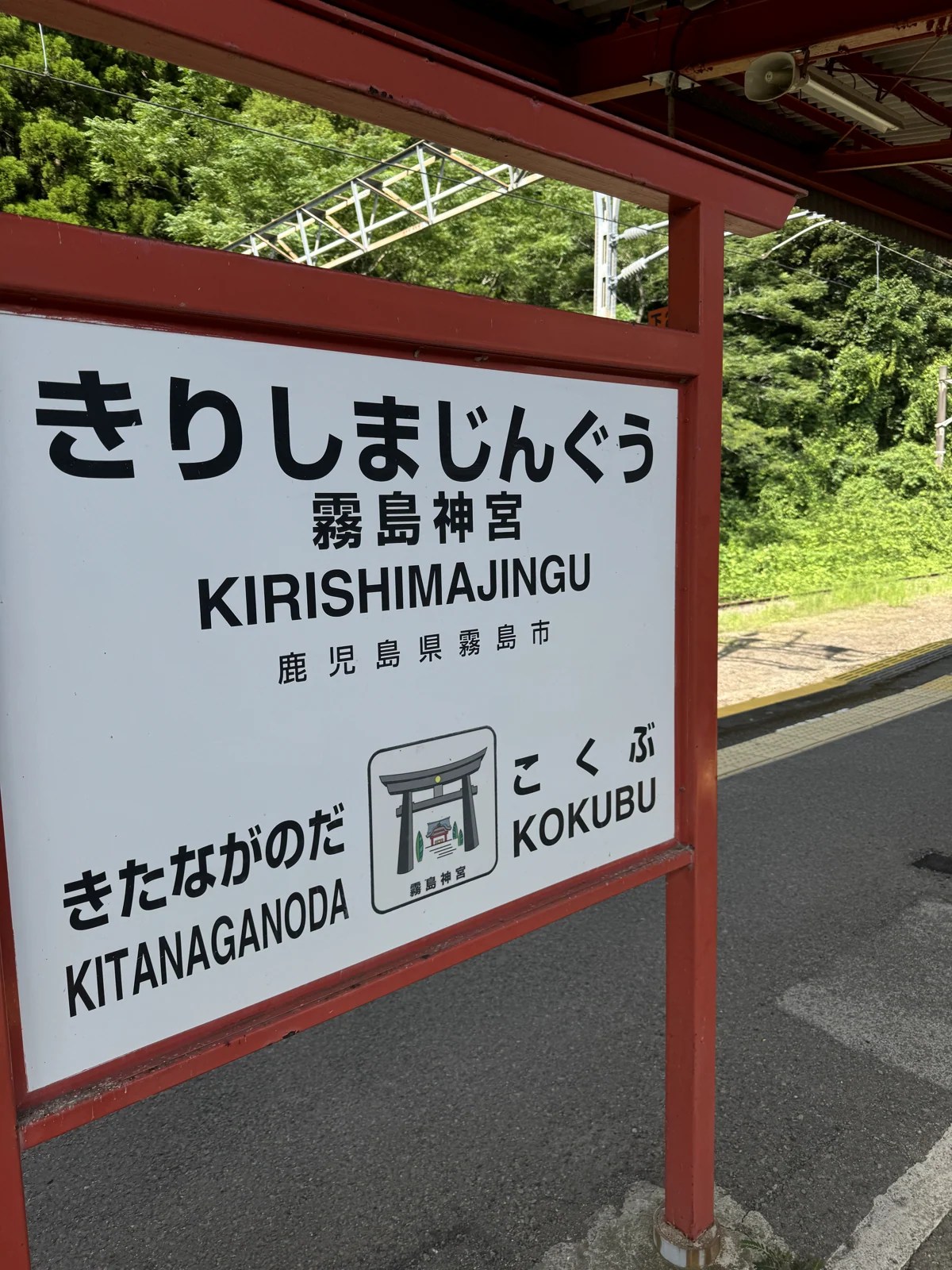
The next day I travelled by train to Kirishima Jingu Station. Beyond it, the view through the vehicle window changed to fields and mountains. Central Kagoshima gave way to a much more wooded landscape.
Kirishima Jingu enshrines Ninigi-no-Mikoto, a grandson of the sun goddess Amaterasu. Shrine tradition connects nearby Mount Takachiho with his descent from heaven. This is a different kind of narrative from the nineteenth-century history I had followed in the city. Myth tells me how people have understood the mountain, rather than supplying a historical account of an event.
According to the shrine’s history, its earlier buildings stood between Mount Takachiho and the Ohachi crater. Eruptions, destruction and relocation form part of its story. The mountain was both a sacred presence and a volcano capable of destroying the shrine.
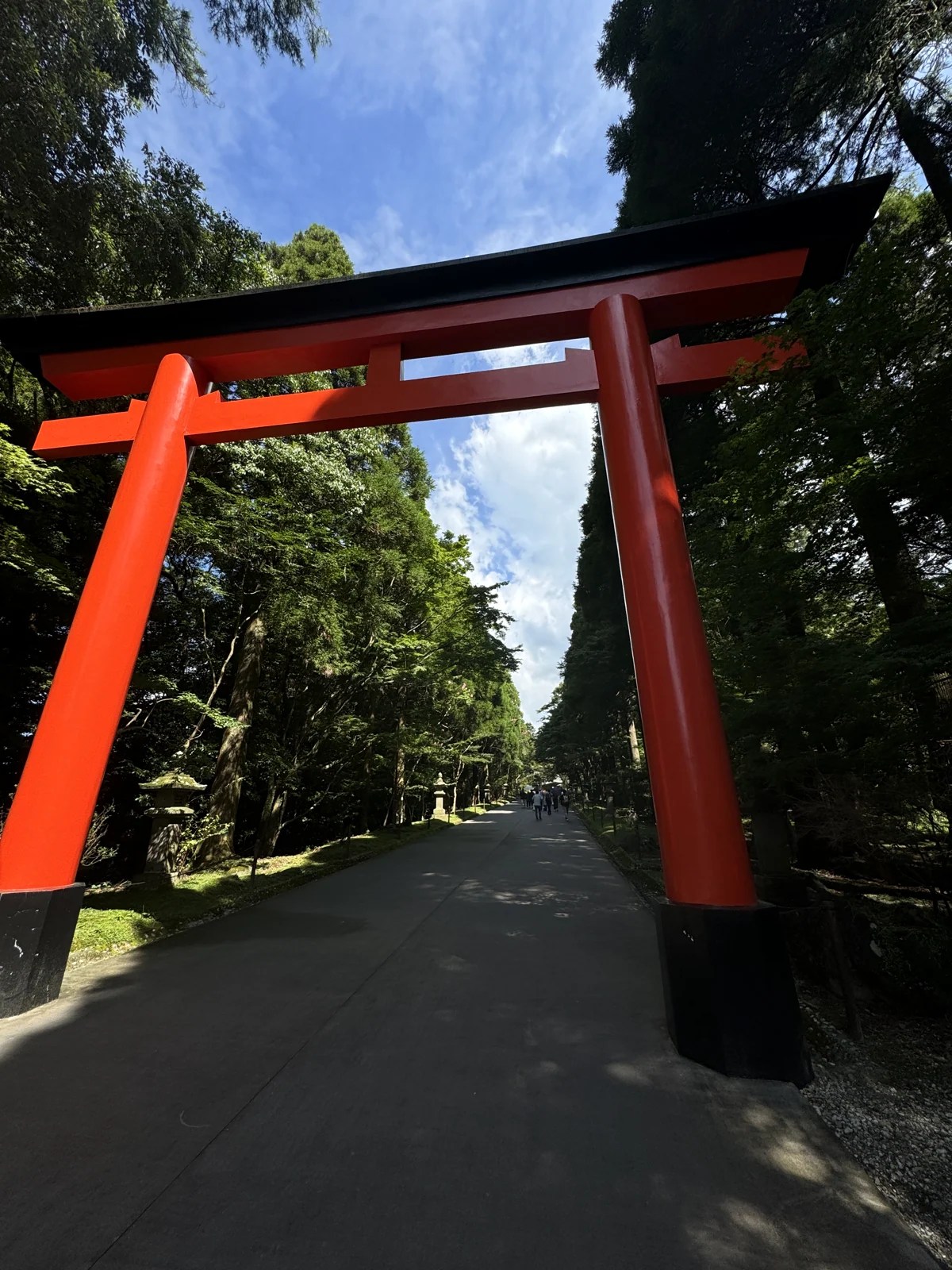
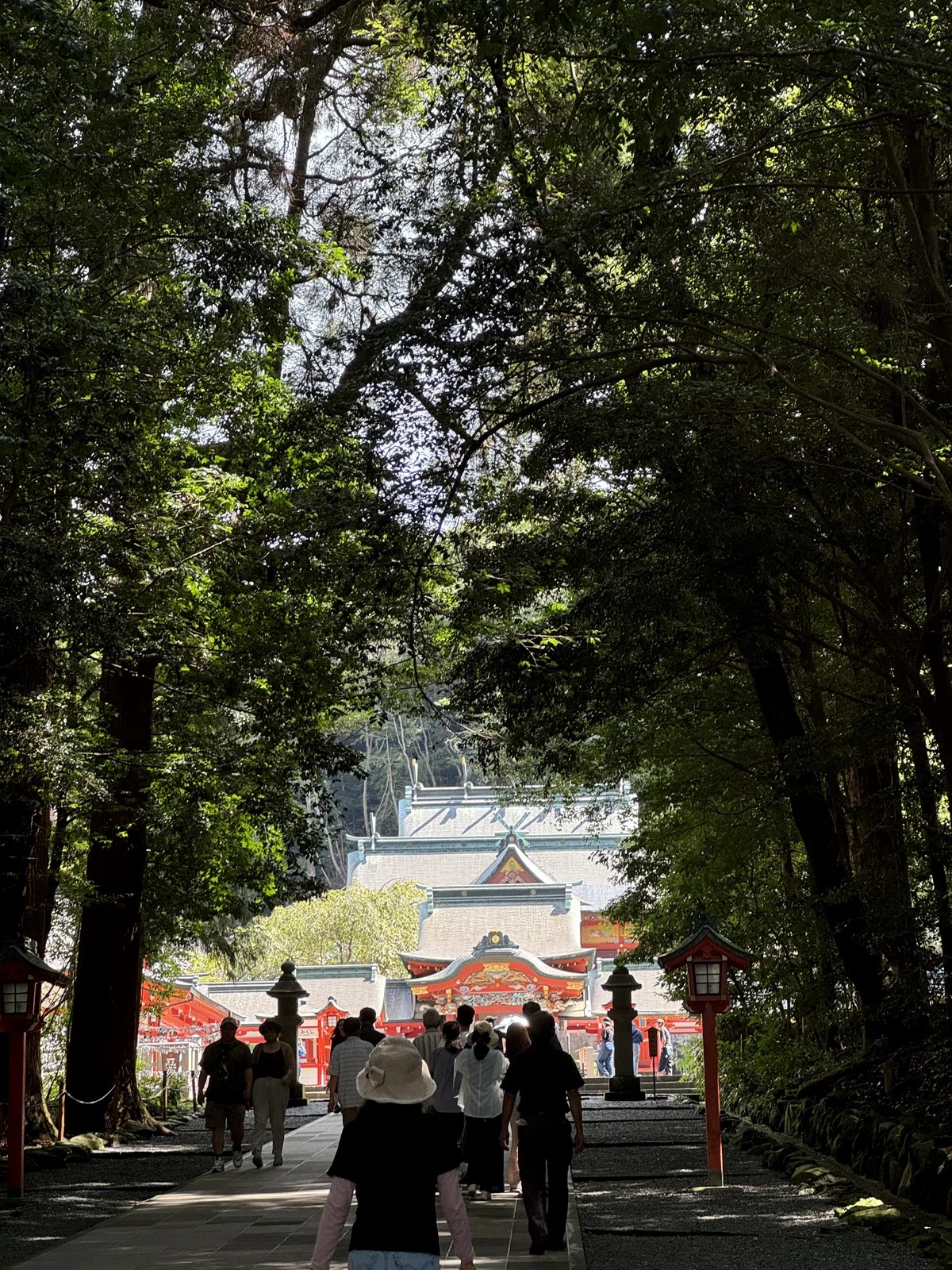
The present buildings were rebuilt in 1715 with a donation from Shimazu Yoshitaka. The main sanctuary, offering hall and worship hall are designated National Treasures. Even away from the city, I encountered the Shimazu family again. My interest in Satsuma led into religious patronage as well as politics and war.
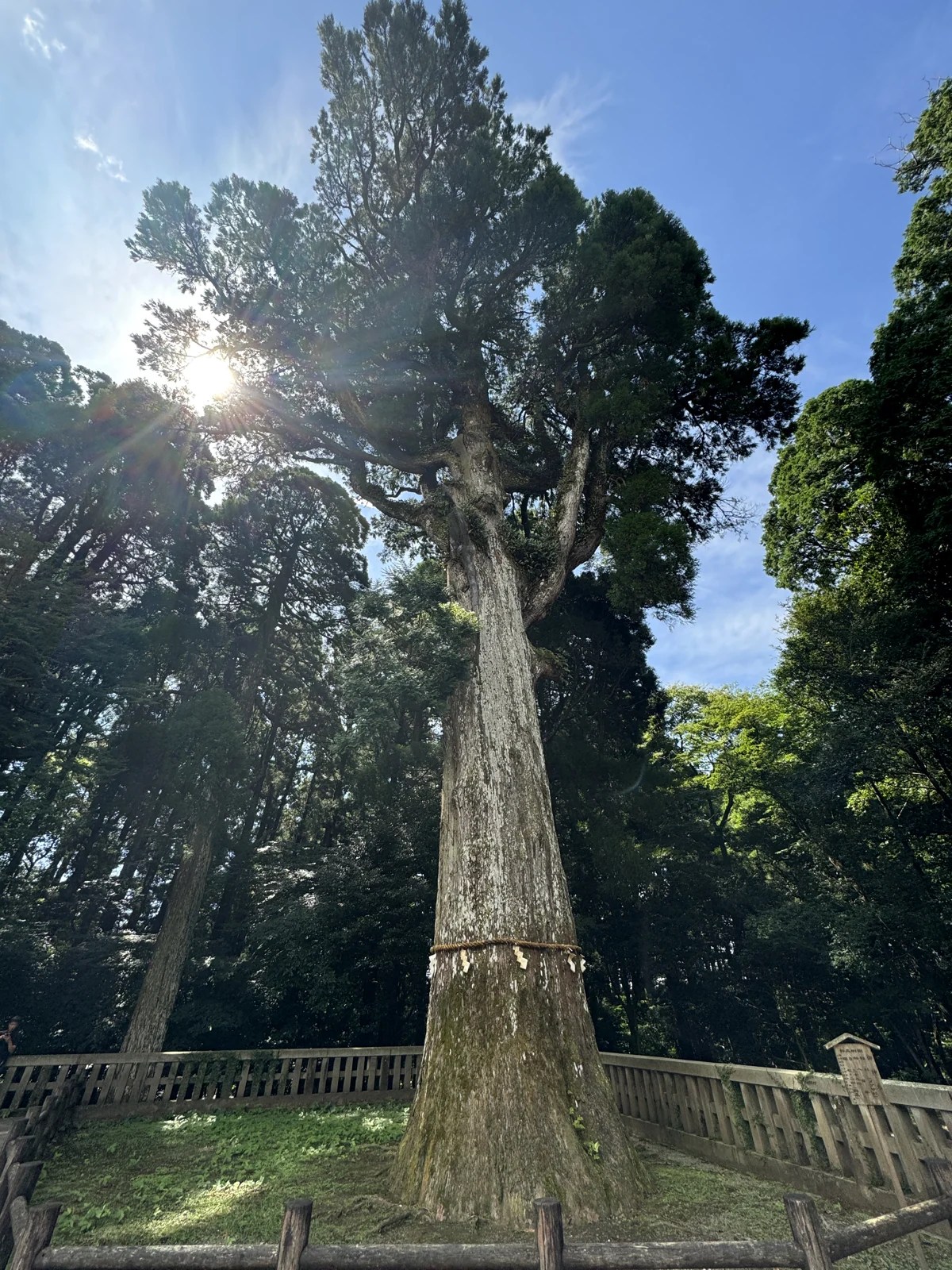
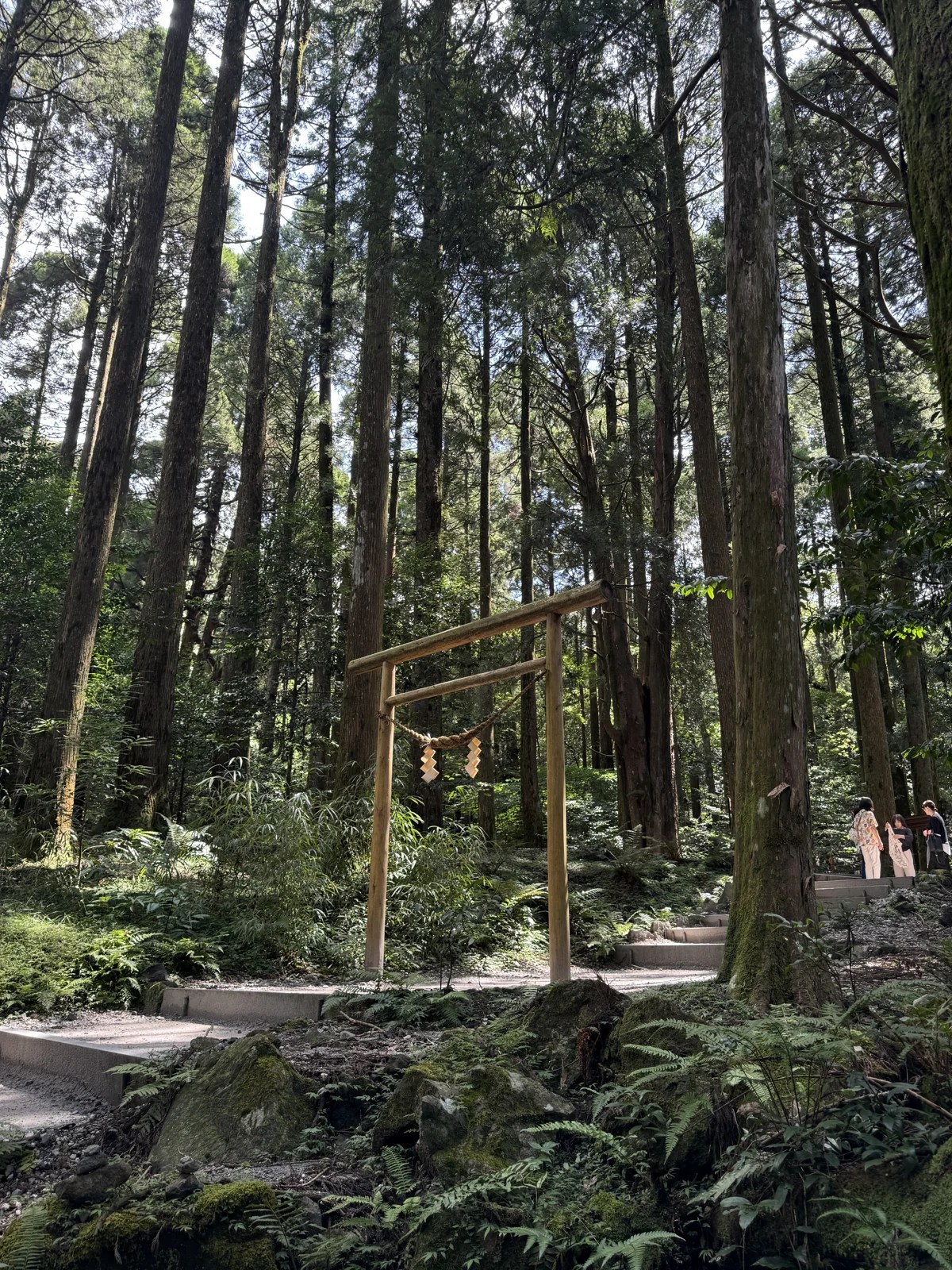
Vermilion buildings appeared among the trees, with a large cedar nearby. I also photographed smaller gates and stone steps in the woodland. Thinking about the volcanic setting and repeated rebuilding gives those bright buildings and shaded paths more context.
Sengan-en: the Shimazu family garden overlooking Sakurajima
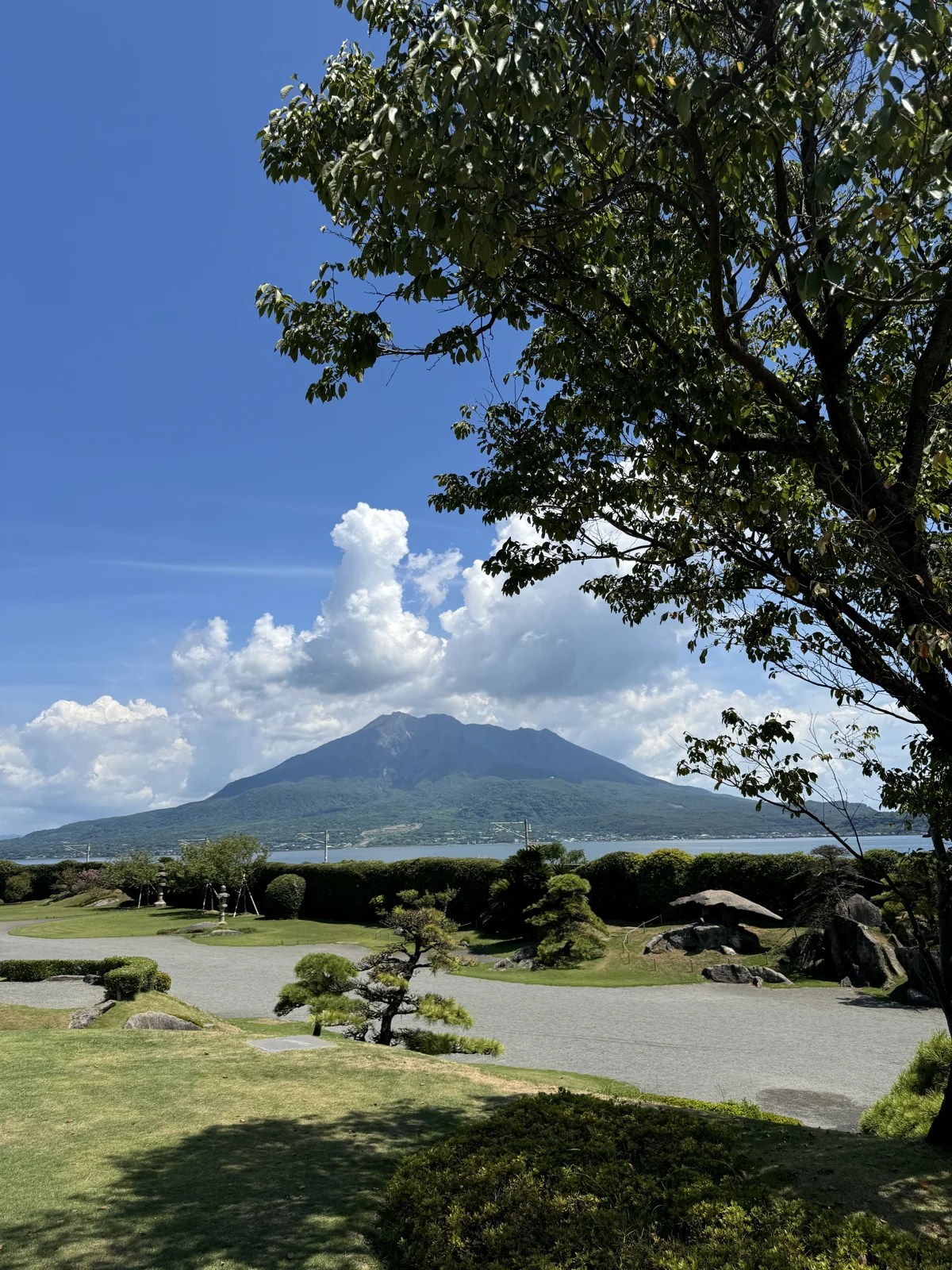
Back in Kagoshima, I went to Sengan-en. Sakurajima stood beyond the lawn. At Shiroyama I had seen it across the city; here it formed the backdrop to a garden.
Shimazu Mitsuhisa established the residence in 1658. The garden is known for borrowed scenery: Sakurajima takes the role of a landscaped hill, and Kinko Bay that of a pond. Rather than recreating a landscape at a smaller scale, the design draws the actual bay and volcano into the view. In my photographs, the open lawn leaves space for that distant scenery.
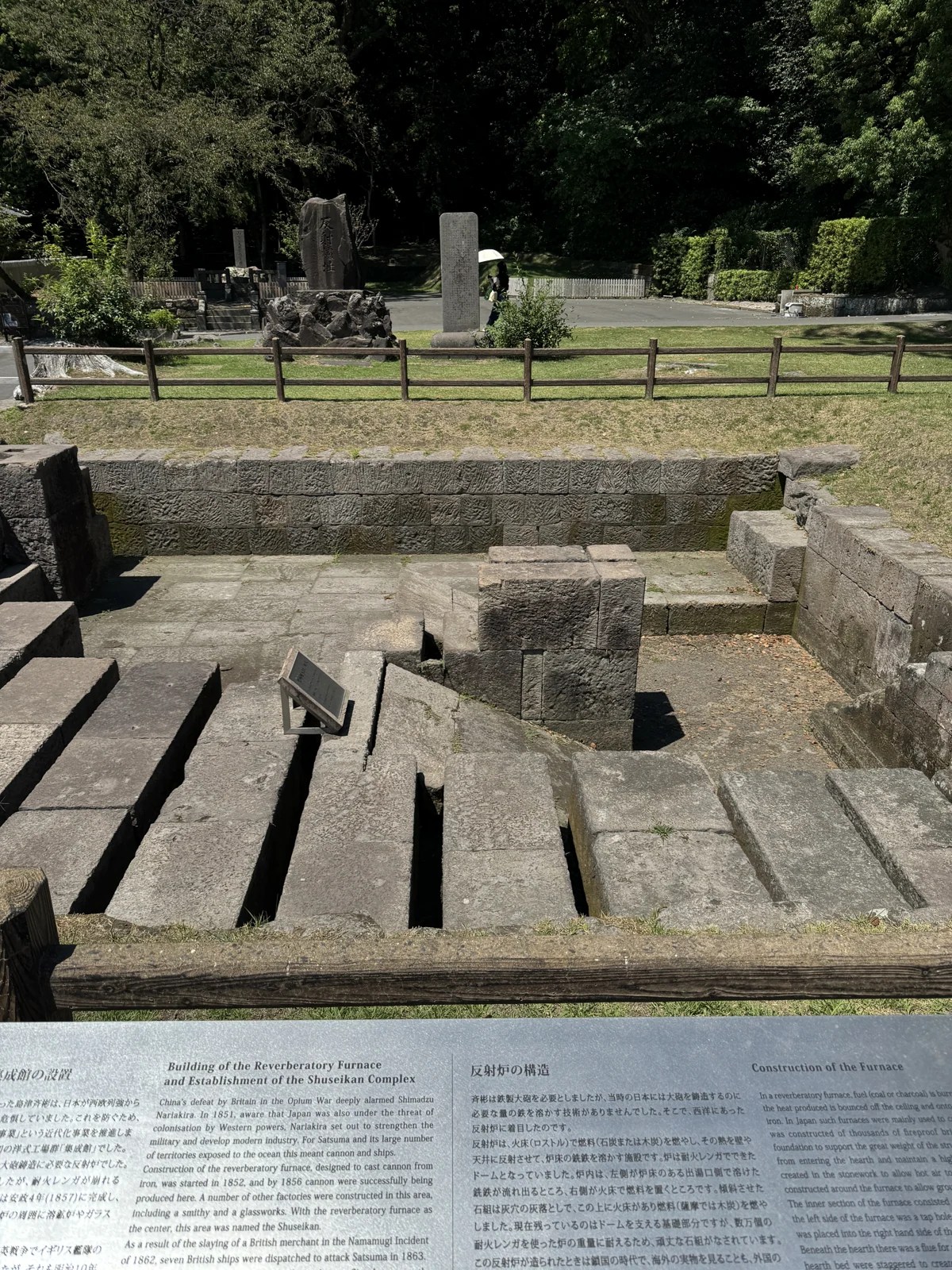
The grounds also bring domestic life alongside industrial history. In the nineteenth century, Shimazu Nariakira developed the Shuseikan industries here, including cannon production and shipbuilding. A lord’s residence stood beside efforts to respond to foreign military power.
I saw the remains of the reverberatory furnace. The surviving masonry is only a fragment of the former works. The factories suffered destruction in the Anglo-Satsuma War of 1863 and were subsequently rebuilt. That history introduces a sense of urgency into a setting that looks so composed. Shuseikan is a component of the UNESCO-listed Sites of Japan’s Meiji Industrial Revolution.
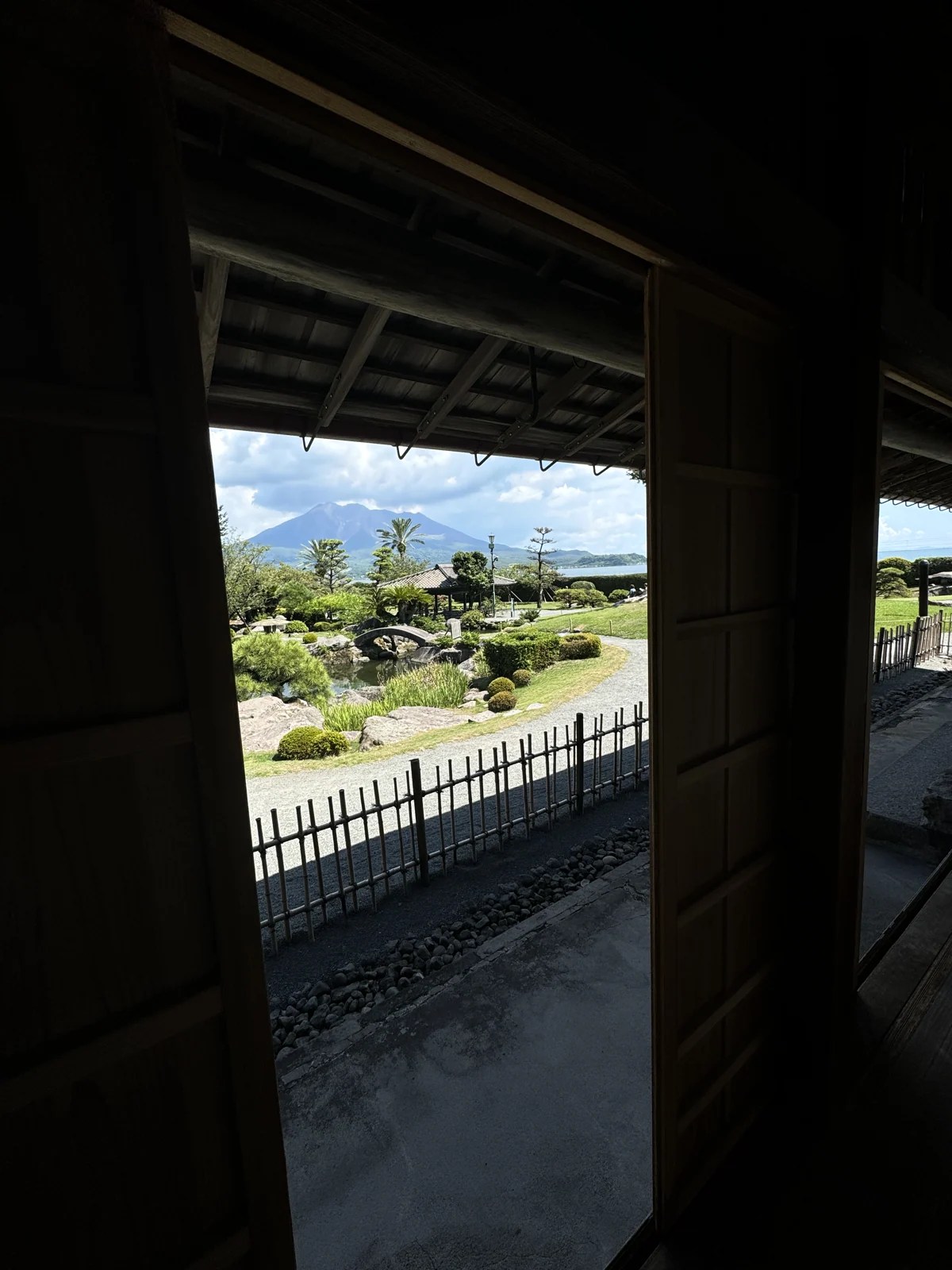
Inside the residence, pillars and eaves framed the garden and Sakurajima from tatami rooms. The building also served as Shimazu Tadayoshi’s principal home for a time. This was a view from rooms in which people lived and received visitors.
I photographed the mountain repeatedly. Those views now connect the family’s home and garden with the industrial changes taking place nearby. Satsuma’s history extends well beyond the lives of the men who first drew me here through Shiba’s novels.
Tenmonkan: kurobuta pork and an evening walk
Torisashi was one of the foods that made the strongest impression on me in Kagoshima. Books had brought me here, but what I ate became part of the journey too.
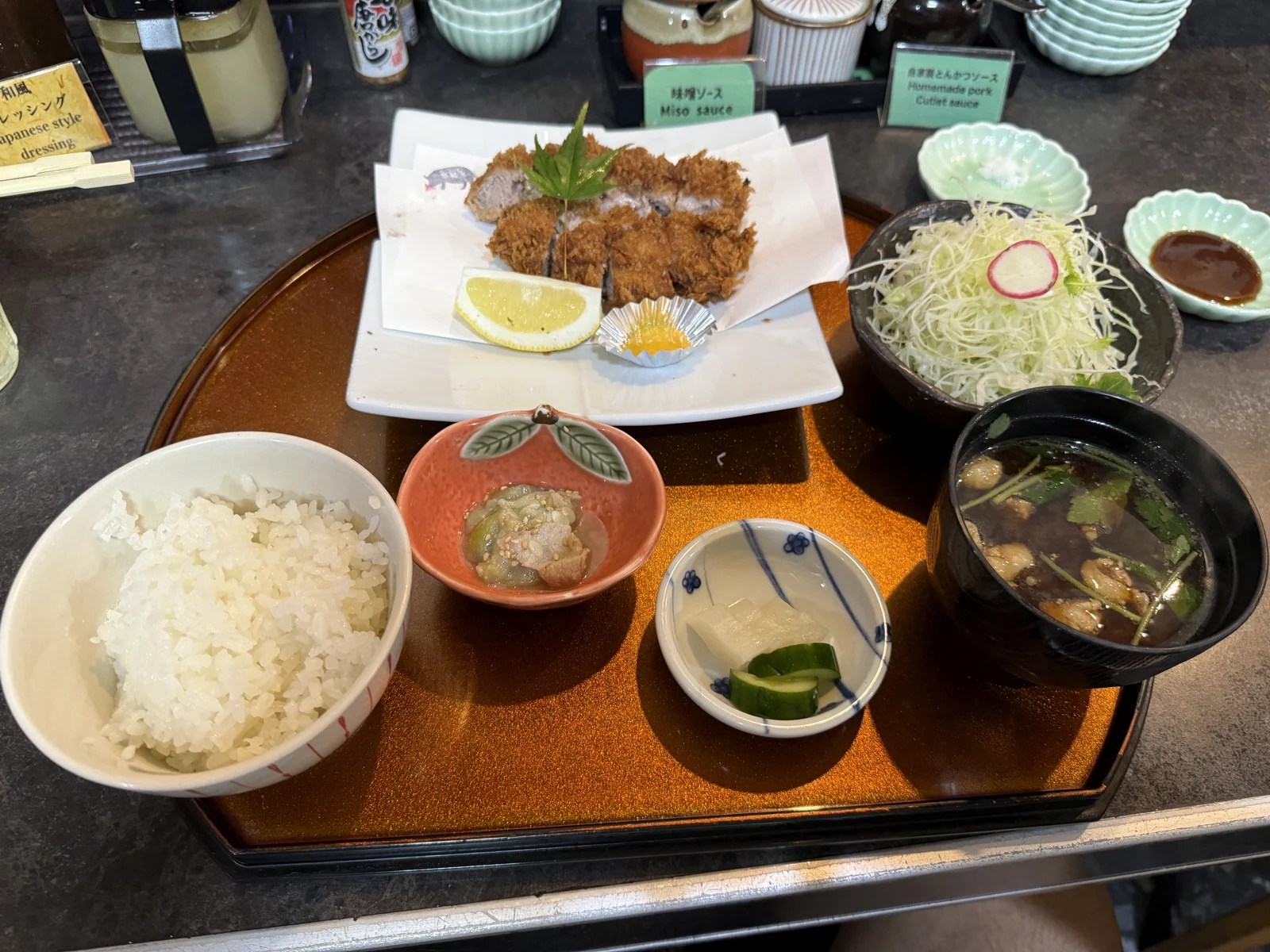
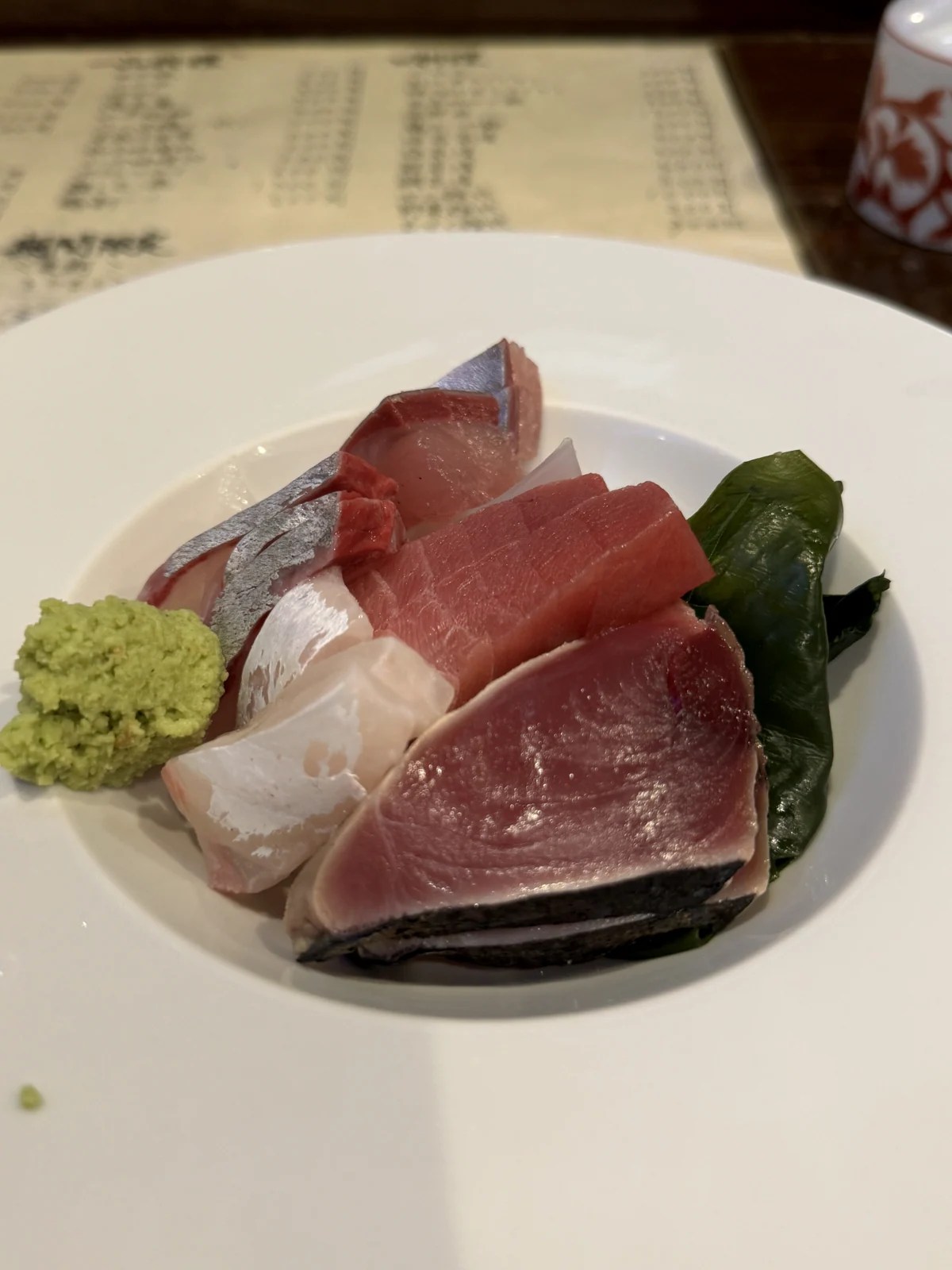
In Tenmonkan I had a kurobuta pork fillet cutlet set meal. My photographs from dinner include fish sashimi, grilled fish and fried dishes.
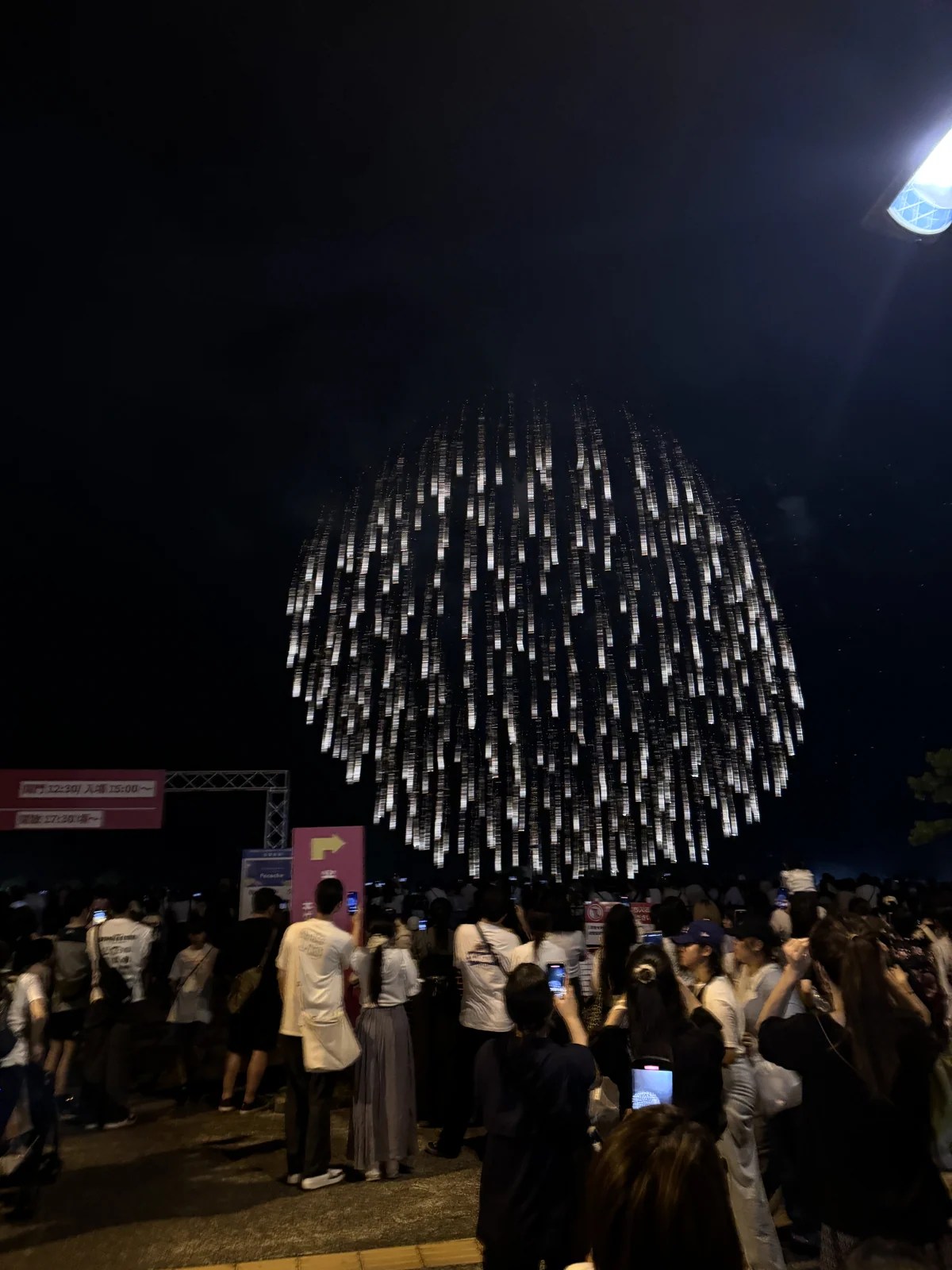
I also watched fireworks above the city at night. Historic sites, a wooded shrine, a garden overlooking Sakurajima and the evening streets all became part of these two nights in Kagoshima.
Where I stayed
| Hotel | Nights | Amount and conditions |
|---|---|---|
| Kagoshima Plaza Hotel Tenmonkan – Vacation STAY 97876 | 2 nights | JPY 26,448 (≈ €148.73 / US$167.37) Booked without meals. |
EUR and USD amounts are approximate reference conversions using ECB rates of 16 October 2026: €1 = JPY 177.82 = US$1.1253. They do not show the exchange rate paid during the 2024 trip; card fees are excluded.
Recommended restaurants
Restaurants and bars visited on this trip.
| Place | Why choose it | Bill · JPY / EUR / USD |
|---|---|---|
| Kurobuta | A Tenmonkan option for a kurobuta pork fillet cutlet set lunch. | JPY 1,700 ≈ €9.56 US$10.76 |
| Shokudokoro Zen | An option for dinner in Tenmonkan; a specific dish recommendation awaits confirmation of the photograph attribution. | JPY 5,300 ≈ €29.81 US$33.54 |
| Bar Jank | A possible bar stop after dinner in Tenmonkan. | JPY 1,800 ≈ €10.12 US$11.39 |
Sources
- Sengan-en and Shuseikan: Kagoshima tourism
- Kirishima Jingu: shrine grounds
- Goju education and Satsuma: Kagoshima Prefecture
- The Satsuma Rebellion: Reimeikan
- Saigo Cave: Kagoshima tourism
- Kirishima Jingu: shrine history
- Kirishima Jingu: National Treasure buildings
- Shuseikan industries and World Heritage: Shoko Shuseikan
- Sengan-en: the residence
- Sengan-en garden: Kagoshima tourism
Background sources checked 19 October 2026. This account concerns the 2024 visit. Check official sites for current visiting conditions.