

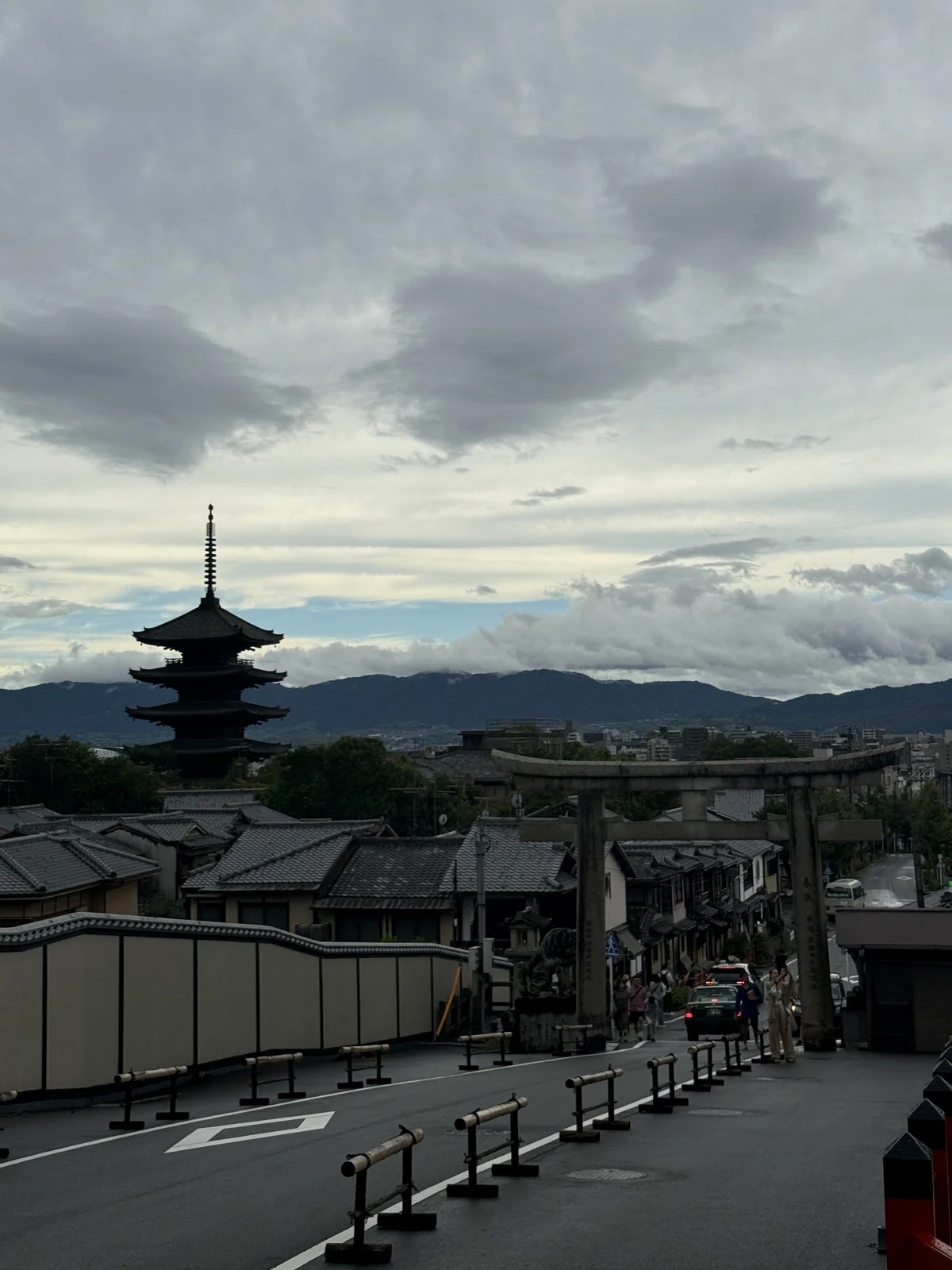
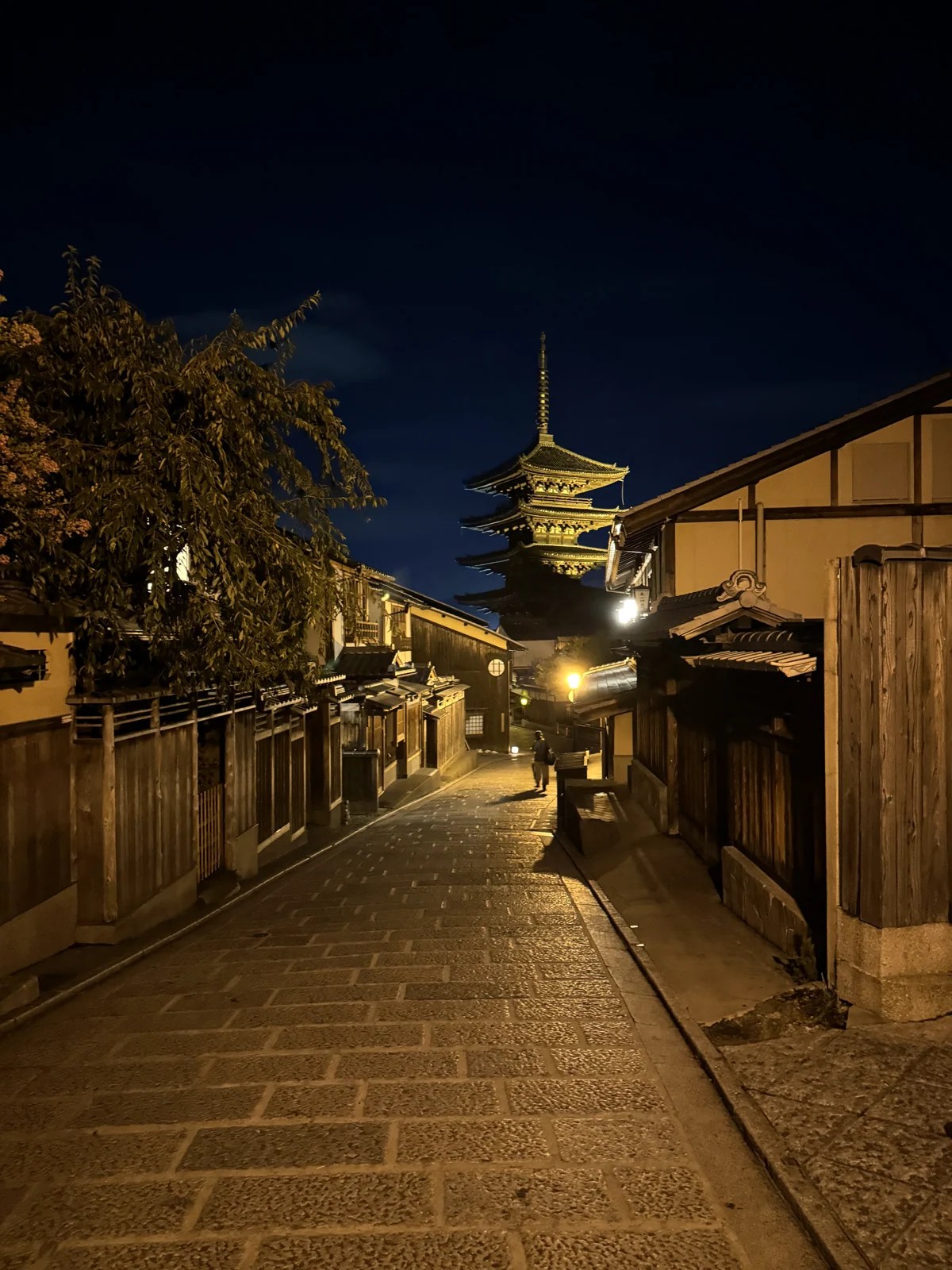
There was hardly anyone on the lane leading towards Yasaka Pagoda.
I had wanted to return to Kyoto after some time away, and stayed for two nights. A typhoon was approaching and there were very few tourists in the streets I walked. The quiet I found on this trip was unusual, rather than a picture of everyday Kyoto.
I walked over wet paving, looked into gardens from Nanzen-ji’s wooden corridors and passed through the bamboo at Kodai-ji. At night I returned to Gion and Yasaka Pagoda. My base was THE GATE HOTEL KYOTO TAKASEGAWA by HULIC.
Places in this travelogue
Takasegawa and Gion Shirakawa: riverside walks and late-shogunate Kyoto
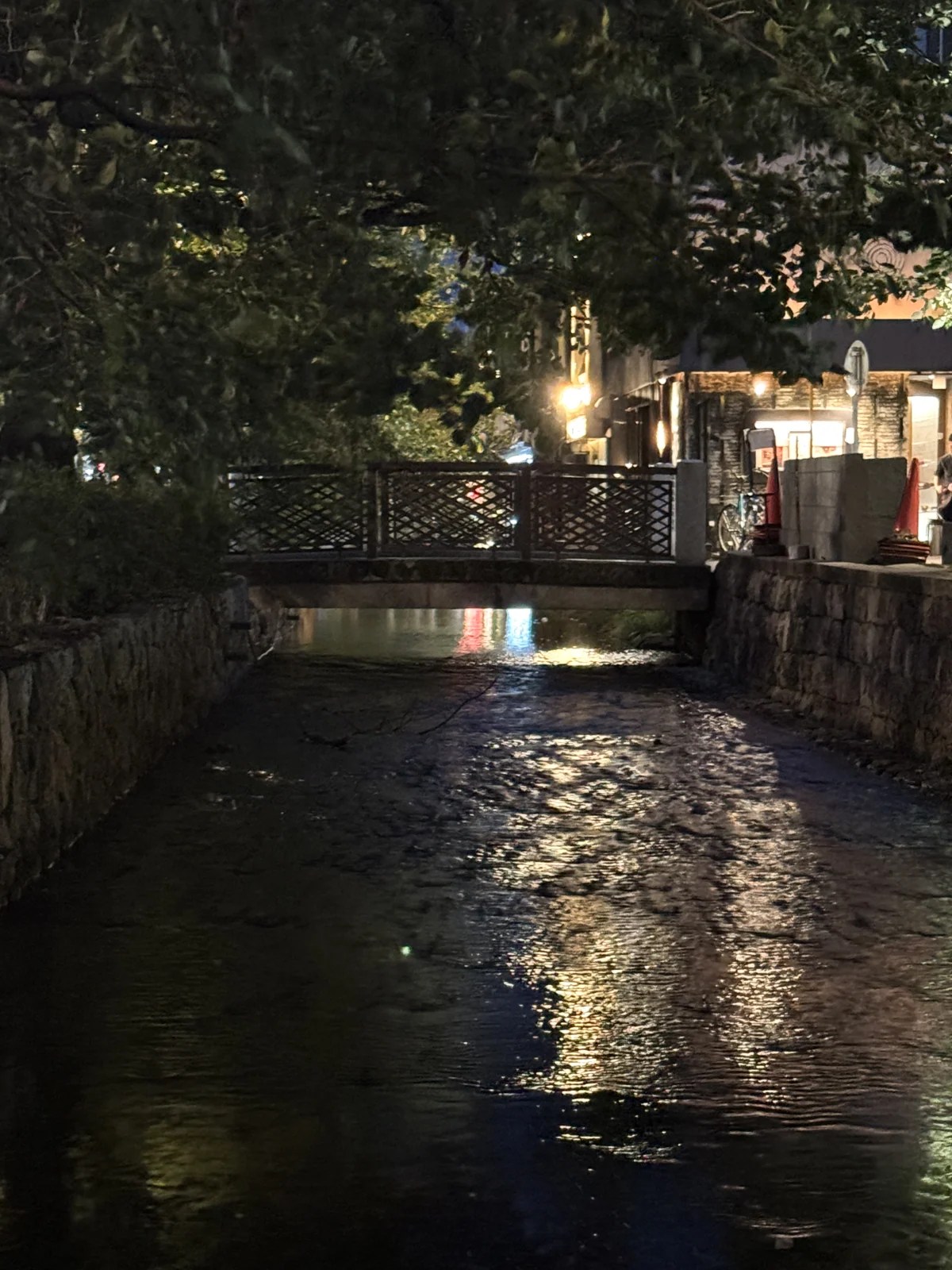
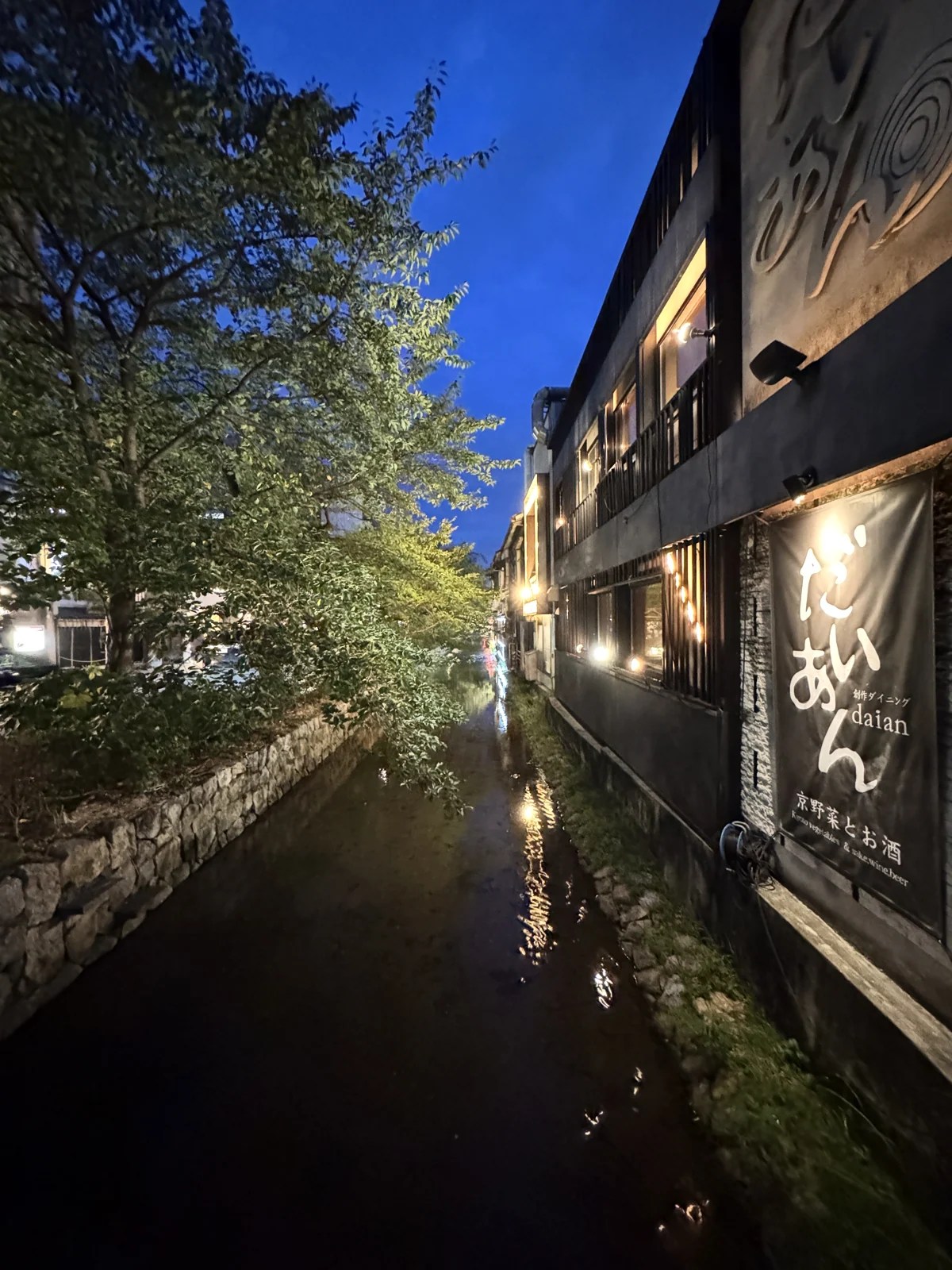
The Takasegawa canal ran close to my hotel. At night, lights reflected in the water beneath trees and wooden lattices. I passed this waterside setting when going out for dinner and returning from walks.
The location has a direct connection with the Bakumatsu, the final years of shogunal rule before the Meiji Restoration. Tosa domain’s Kyoto residence occupied the area around what later became Rissei Elementary School. My hotel stands on the former school site. The ground around my accommodation was already part of the history I might otherwise have gone out to find.
People from Tosa and Choshu based themselves around Kiyamachi and Kawaramachi. The Takasegawa belonged to a transport network linking Kyoto with Fushimi and Osaka. Its narrow present-day channel gives little sense of the movement of people and goods for which it once served.
This was also the district in which Sakamoto Ryoma and Nakaoka Shintaro were attacked at Omiya. I did not make a tour of each associated site. Still, the proximity of residences, lodgings and shops helps me think beyond a chronology of political meetings and violent incidents: people with competing purposes were living close to one another.
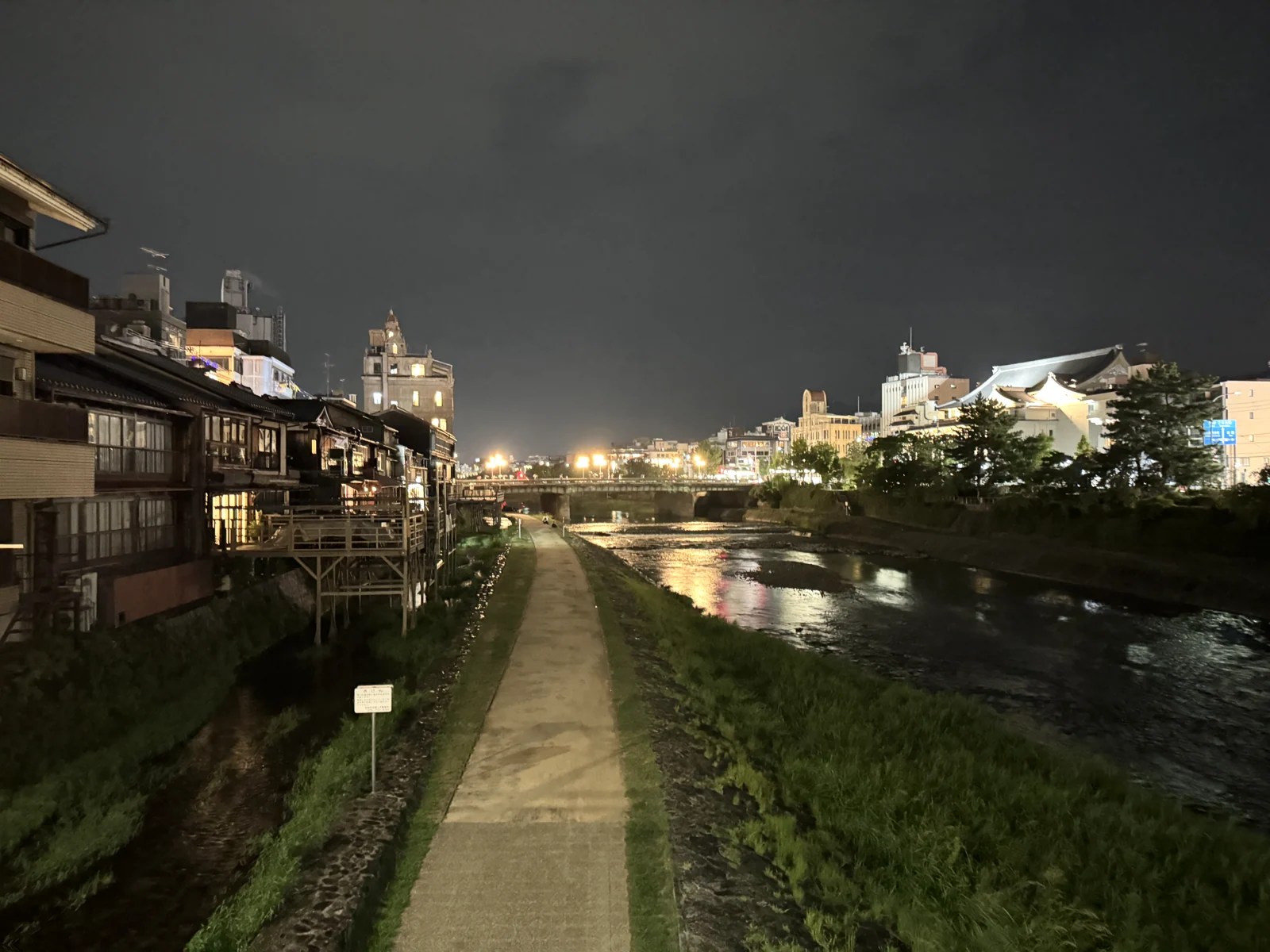
At Gion Shirakawa, water ran beneath trees beside lit buildings. At the Kamo River the view opened out. Walking between these different waterside spaces gives the history a scale. I find the relationship between the waterways and streets more useful than imagining that everything around me has survived unchanged.
Nanzen-ji: the Sanmon gate, aqueduct and gardens
At Nanzen-ji I looked up at the Sanmon gate, with its heavy roof and rows of substantial pillars. The temple began in 1291, when the retired Emperor Kameyama made his villa into a Zen temple and invited Mukan Fumon as its founding abbot. Before it was a monastery, this had been an imperial residence.
Todo Takatora rebuilt the present gate in 1628 to commemorate retainers killed in the summer siege of Osaka. That purpose changes how I read its imposing appearance. A building that projects strength can also be a place of remembrance.
The gate is associated with Ishikawa Goemon in kabuki theatre. Its name refers to three Buddhist gateways to liberation. Religious meaning and theatrical associations sit alongside its physical presence. Learning what the name means adds another dimension to the massive structure I looked up at.
Further in, the brick Suirokaku aqueduct appeared among the wooden buildings. Completed in 1888, it carries water for the Lake Biwa Canal system. Its age belongs to a different story. In a short walk I moved between the medieval temple’s origins, early modern rebuilding and a modern water project.
Inside the Hojo, pillars and eaves enclosed views of gravel, stones and greenery. Its larger and smaller buildings are National Treasures. Accounts of the larger building’s origins differ over precisely which imperial building was moved here. Even a concise architectural history contains both established details and questions.
As I turned along the corridors, the view changed from white gravel to moss and plants. My photographs return to that light and depth. The history gives me more to consider, while moving through the building keeps the experience physical and particular.
Kodai-ji: Nene’s temple and the bamboo grove
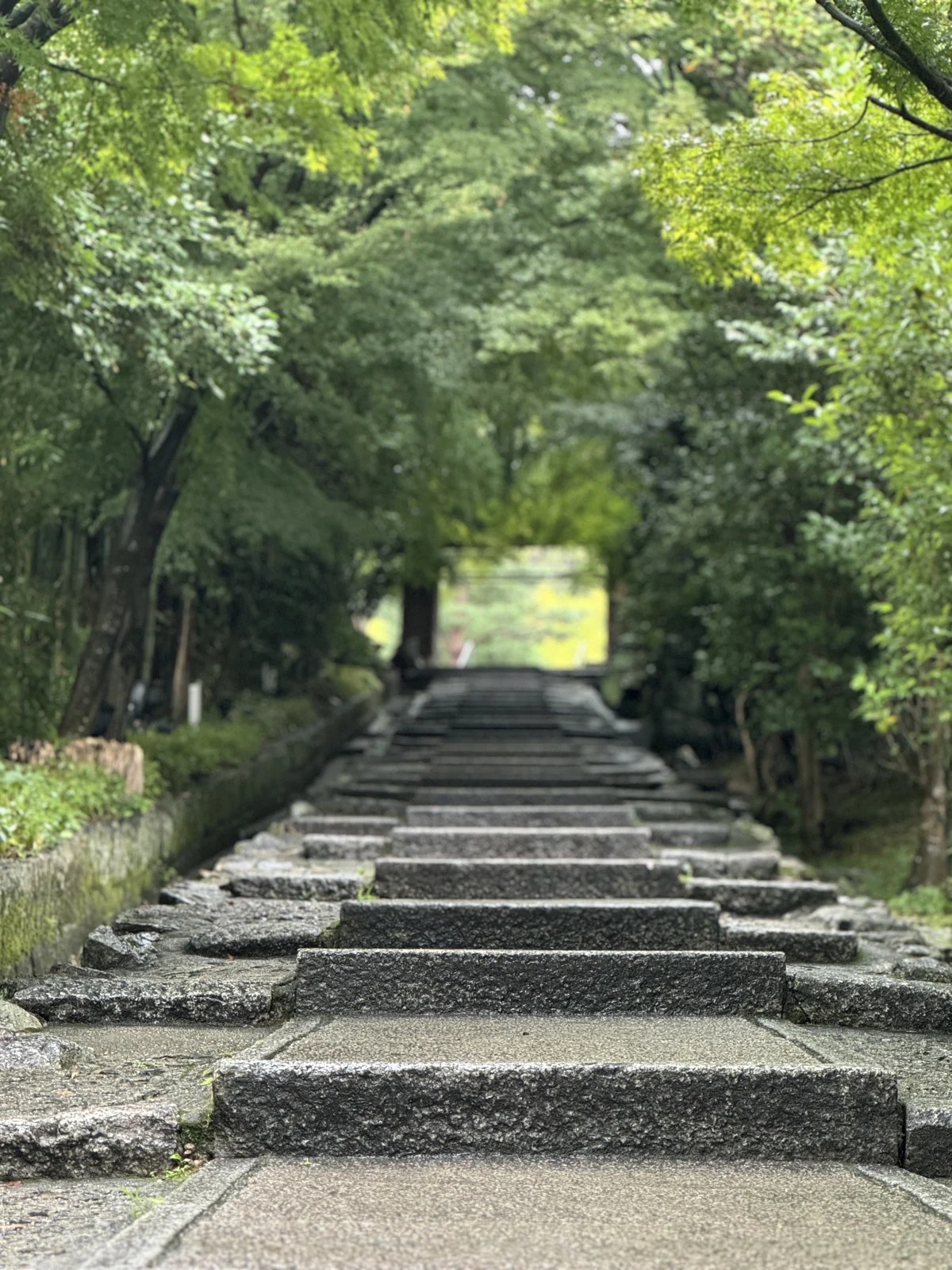
Trees enclosed the steps towards Kodai-ji. Within the grounds I looked out from covered walkways, walked beside the ponds and continued into the bamboo grove.
Nene, Toyotomi Hideyoshi’s widow, founded the temple in his memory in 1606. A detail worth pausing over is that Tokugawa Ieyasu provided substantial financial support. The temple’s own account relates this to the politics of the time. A place preserving Hideyoshi’s memory also owed support to the new ruling power.
Commemorating Hideyoshi and the politics of the new Tokugawa order appear in the same foundation story. The description “Nene’s temple” draws attention to a marriage, but the creation of its buildings and gardens involved a wider set of relationships.
Nene was also buried here, beneath her statue in the mausoleum, where statues of her and Hideyoshi are enshrined. The mausoleum is known for Kodai-ji maki-e lacquer decoration. Alongside the gardens, that purpose of remembrance belongs to how I understand the temple.
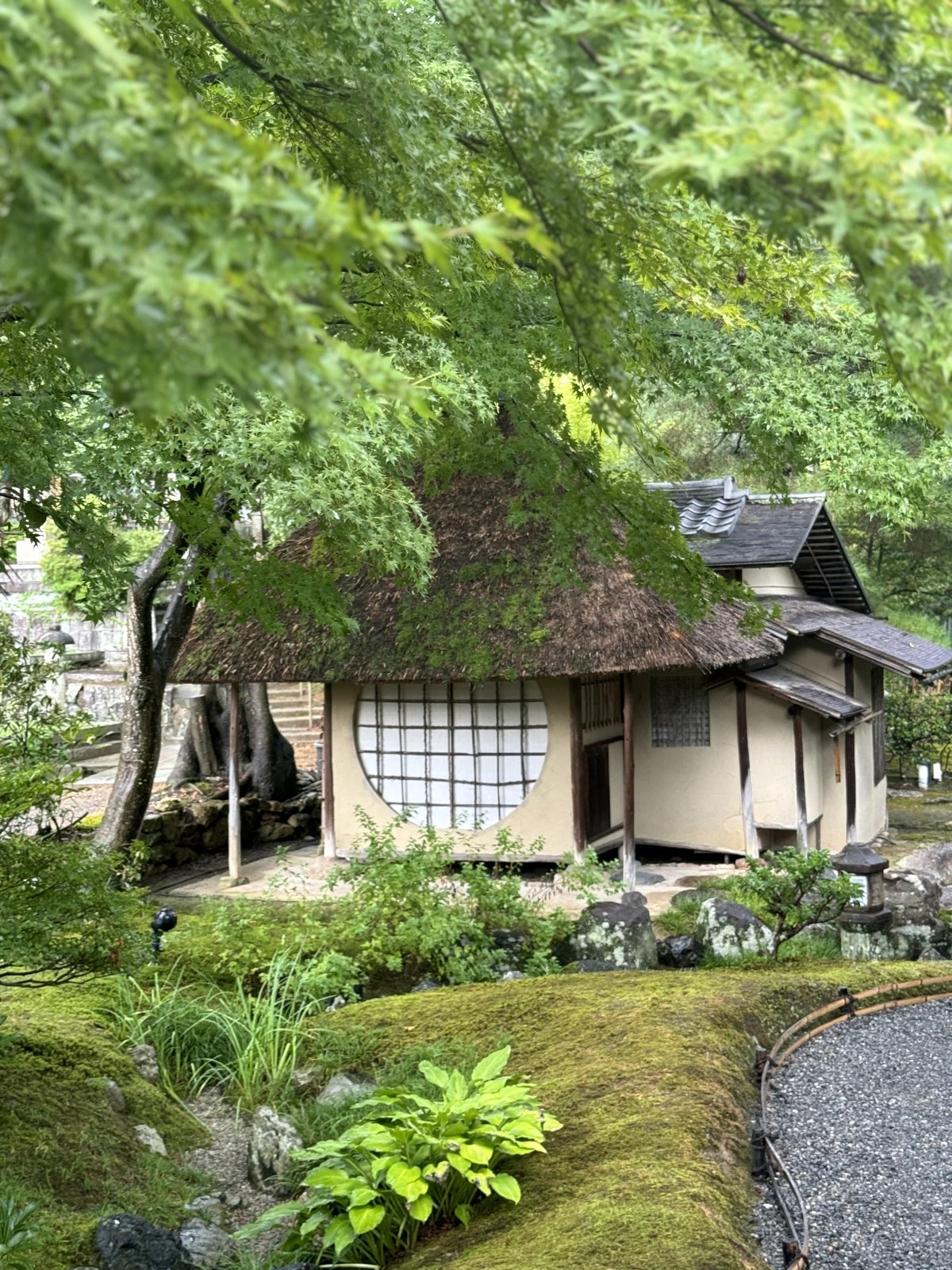
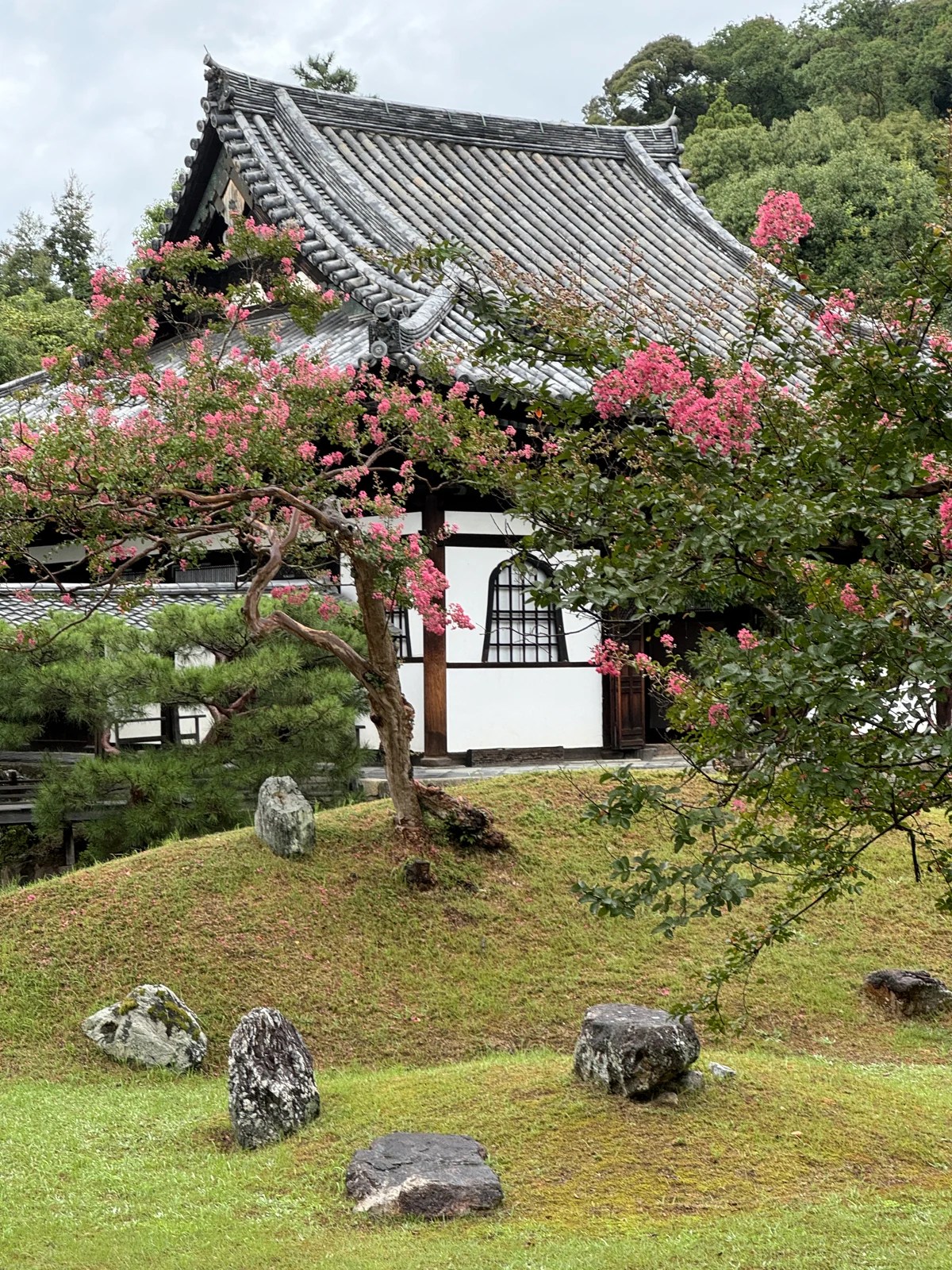
My photographs show thatched buildings, greenery reflected in water and roofs above the walkways. The pond garden is traditionally attributed to Kobori Enshu. The route moves between views across a garden and paths within the trees.
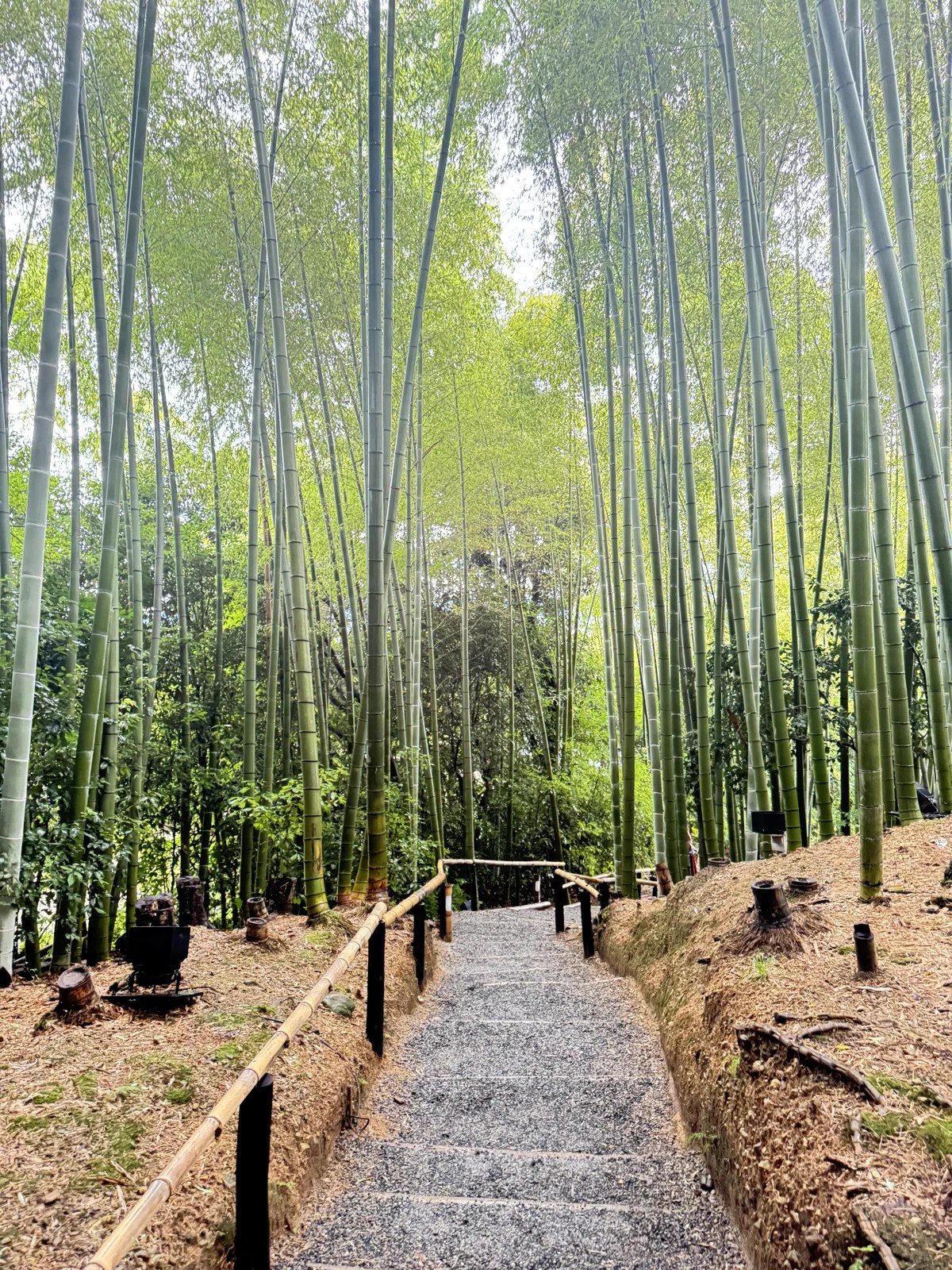
In the bamboo grove, tall stems filled the view. This was different from the gravel and stones at Nanzen-ji. The changes between temples involve their histories and the people associated with them as well as the gardens themselves.
Yasaka Jinja and Yasaka Pagoda: an evening walk through Gion
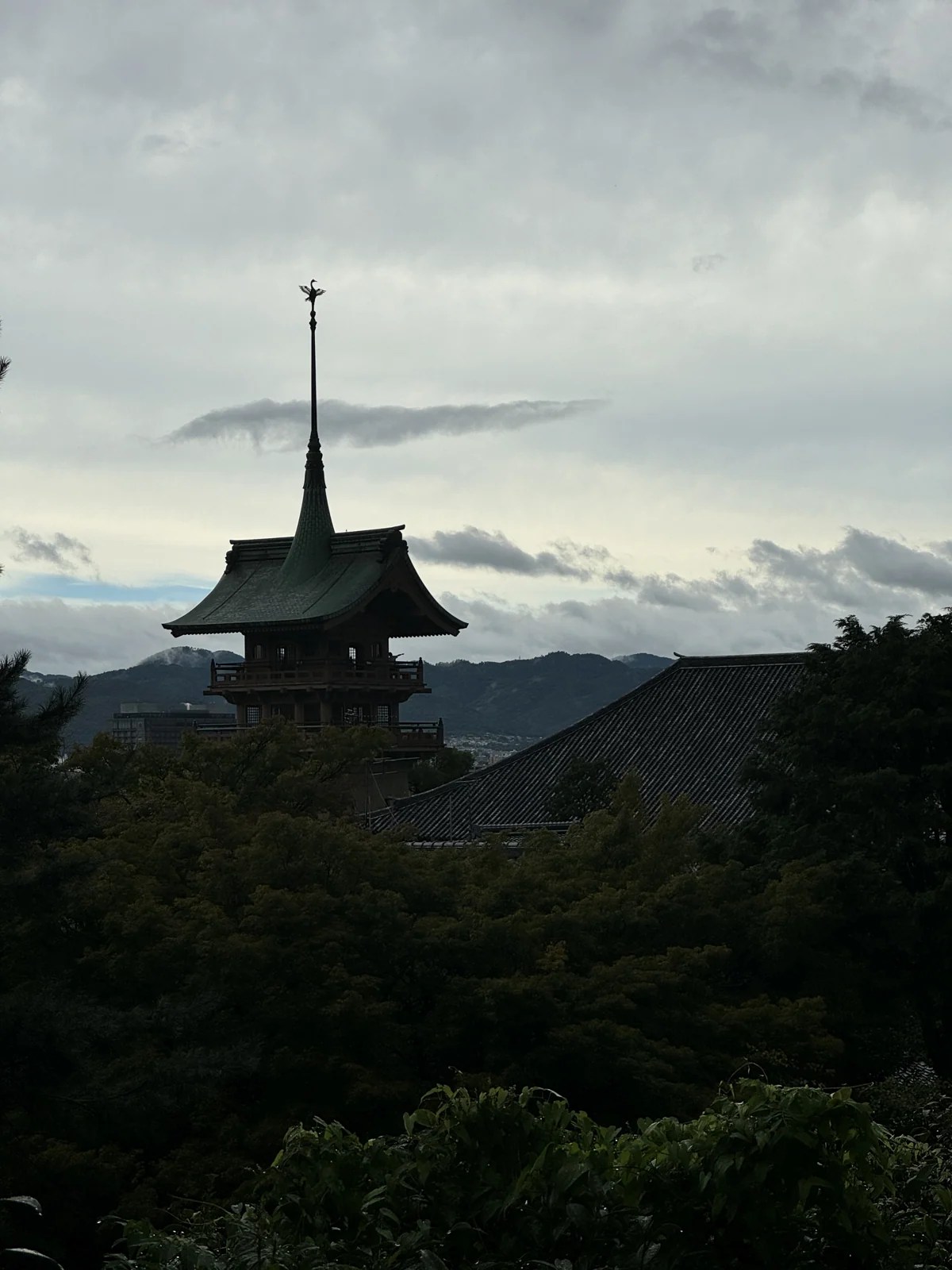
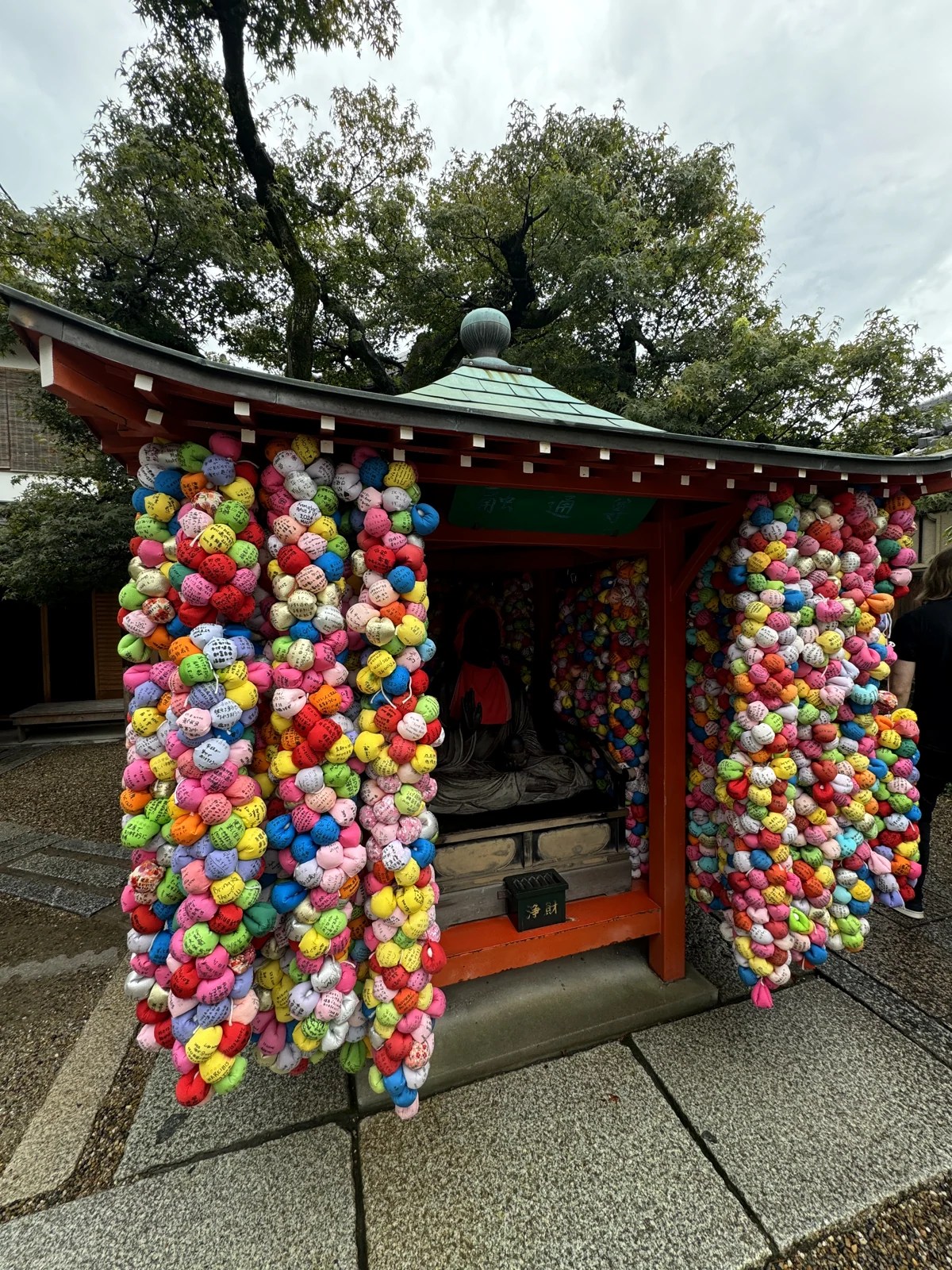
Yasaka Pagoda rose above the lane ahead, its roofs stacked one above another. The balance between the tower and the street changed as I approached. I viewed it from outside. Nearby, colourful cloth charms hung at Yasaka Koshindo.
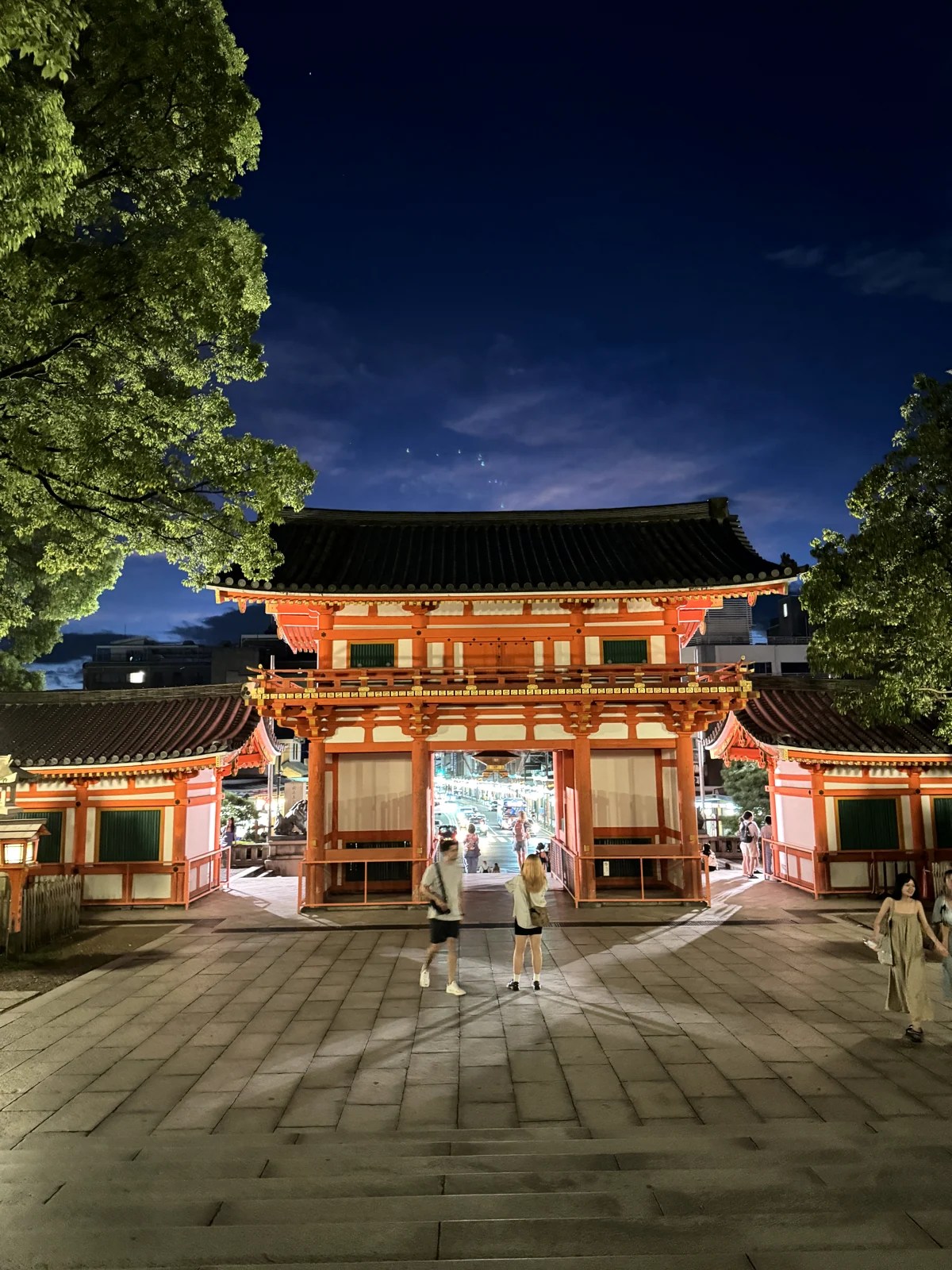
At night I went to Yasaka Jinja. Despite the shared name, the pagoda belongs to Hokan-ji temple and is separate from the shrine. A short walk brings together distinct religious sites and histories.
Yasaka Jinja presents more than one tradition about its origins. Rather than choosing a single founding date, I find it more useful to recognise the layering of Buddhist and Shinto traditions here. It adopted the name Yasaka Jinja in 1868; earlier names included Gion-sha, linking it directly with the surrounding district’s name.
The Gion Festival also has a history beyond its spectacular floats. Shrine tradition traces it to prayers during an epidemic in 869, when sixty-six halberds, representing the provinces, were erected at Shinsen-en and portable shrines were sent there. Its origins concern the fears of people living in a city, as well as the festival for which Kyoto is now known.
With a typhoon approaching, I walked through the evening streets and looked at the lights. The history of prayers for protection brings the relationship between shrine and city closer to everyday life: people gathering, living together and hoping that danger will pass.
Back on the lane towards the pagoda, light fell across the paving. I photographed places I had already seen in daylight. I remember the unusually empty lanes and their quiet together with the weather surrounding this visit.
THE GATE HOTEL KYOTO TAKASEGAWA: an evening in the lounge
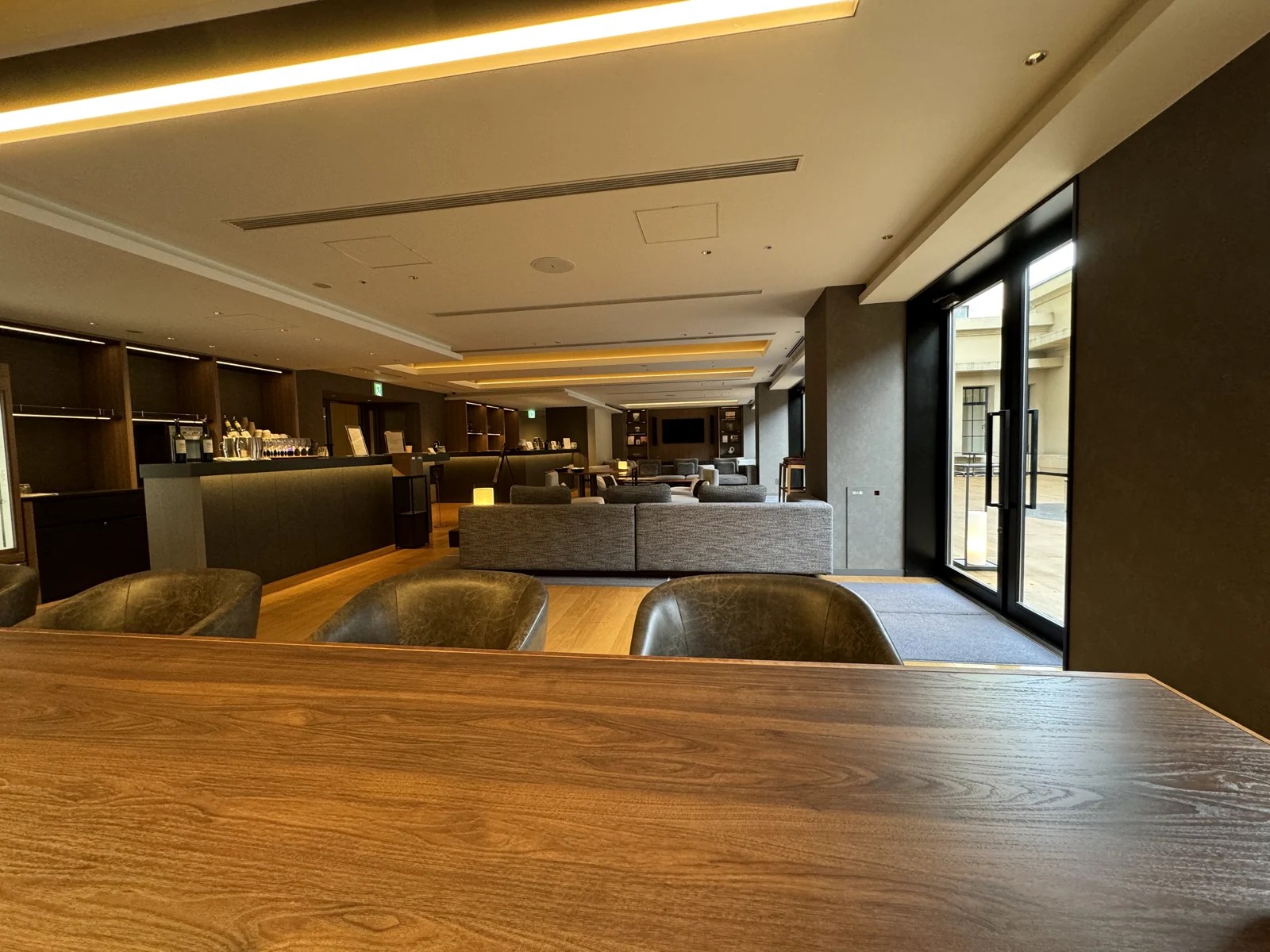
THE GATE HOTEL KYOTO TAKASEGAWA by HULIC stood beside the canal. Alcoholic drinks are served in the lounge, making it an option for a break between walks or at the end of the day. After walking through the city at night, I came back to this area.
The hotel occupies the former Rissei Elementary School site, with a new building and another retaining the former school structure.
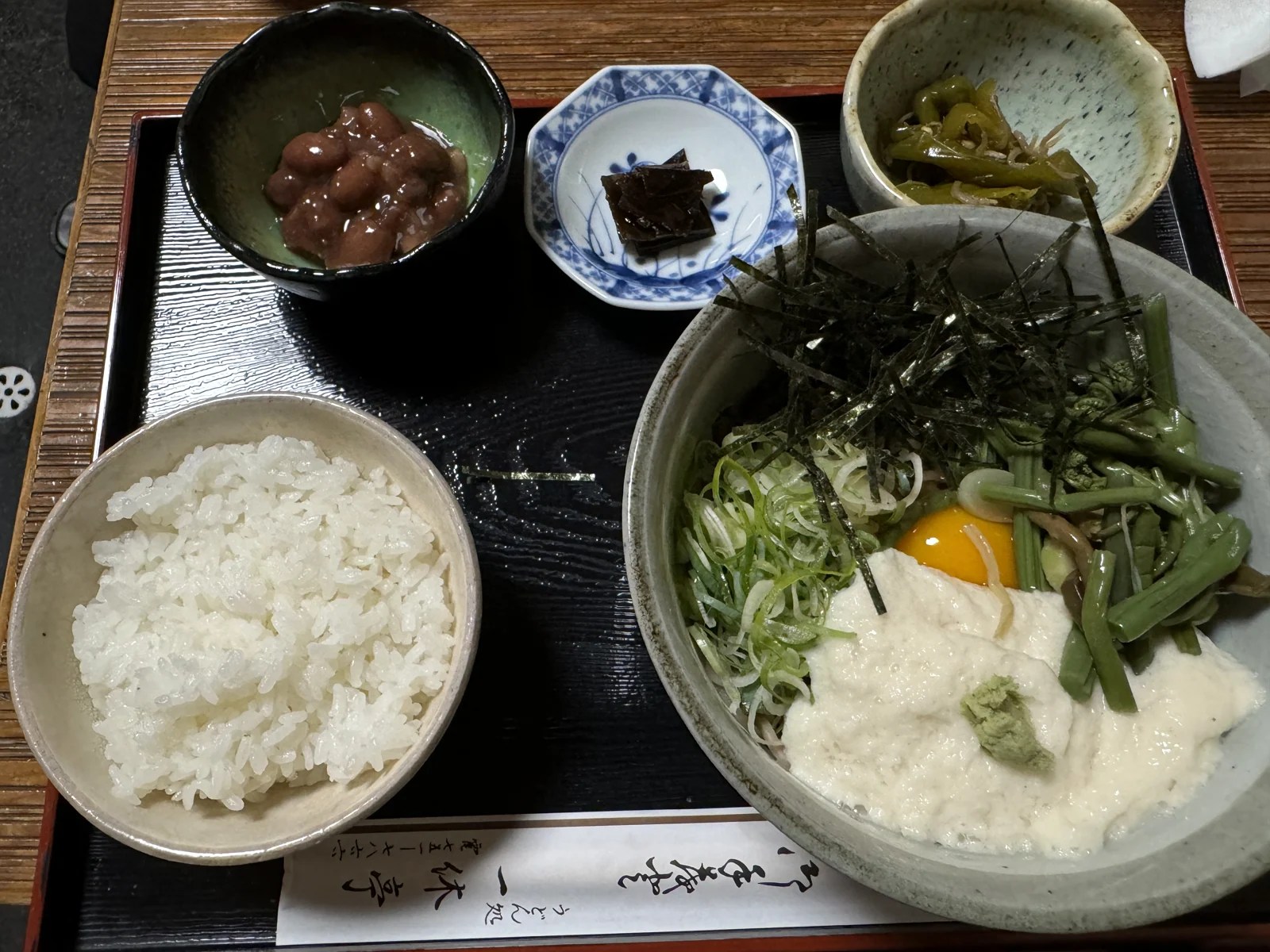
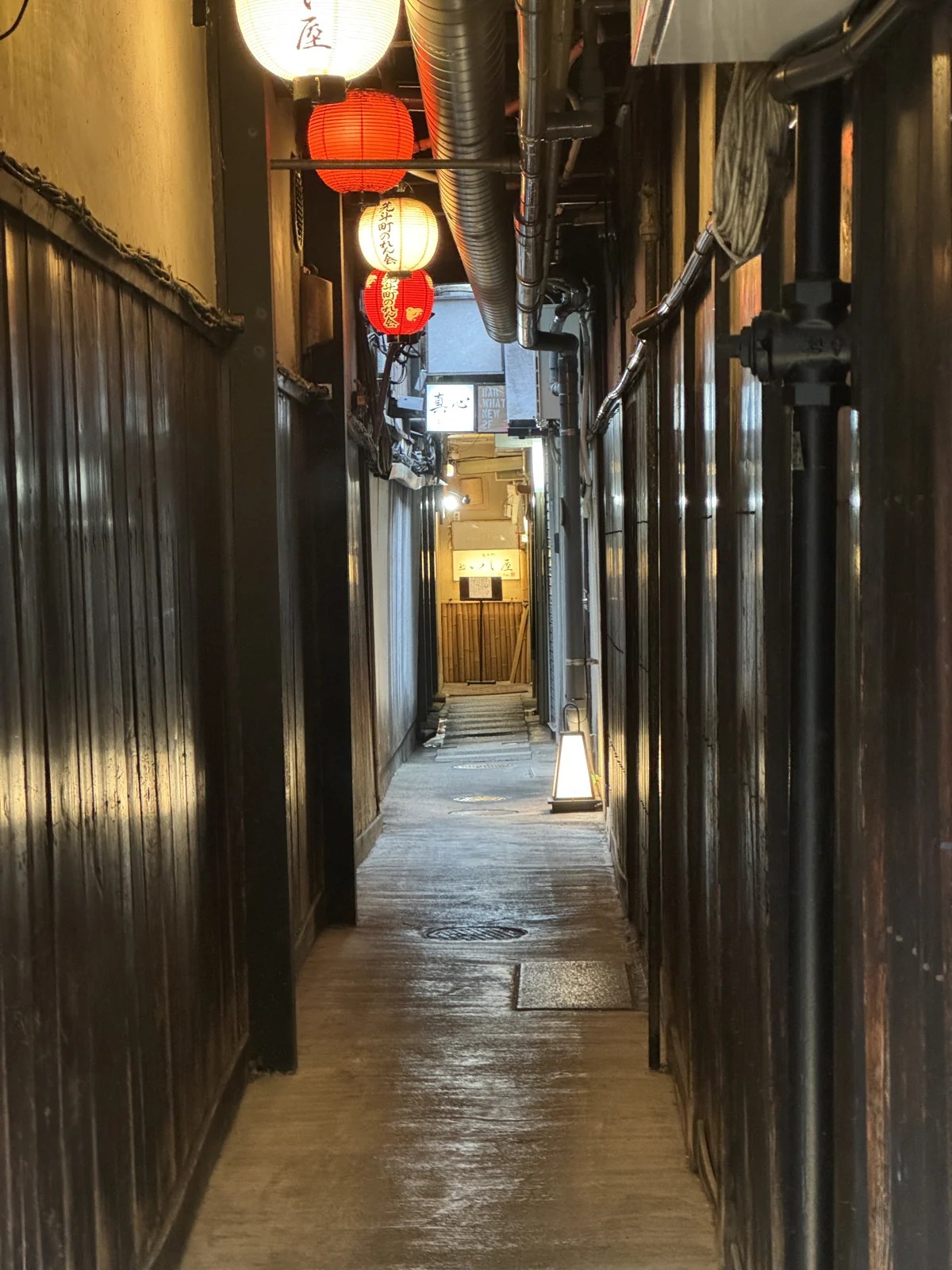
At Negiya Heikichi Takasegawa, the order included Kamo aubergine and Kujo spring onion dishes. Near Nanzen-ji I ate a soba and rice set at Ikkyu-tei, and in the evening I also went into the lanes of Pontocho. Walks through temples and gardens alternated with meals back in the city over these two nights. I also had a dinner of sashimi and small dishes at Gion Yoshimi.
Where I stayed
| Hotel | Nights | Amount and conditions |
|---|---|---|
| THE GATE HOTEL KYOTO TAKASEGAWA by HULIC | 2 nights | JPY 60,000 (≈ €337.42 / US$379.70) |
EUR and USD amounts are approximate reference conversions using ECB rates of 16 October 2026: €1 = JPY 177.82 = US$1.1253. They do not show the exchange rate paid during the 2024 trip; card fees are excluded.
Recommended restaurants
Restaurants and bars visited on this trip.
| Place | Why choose it | Bill · JPY / EUR / USD |
|---|---|---|
| Negiya Heikichi Takasegawa | For Kamo aubergine and Kujo spring onion dishes, with a meal near the Takasegawa. | JPY 19,144 ≈ €107.66 US$121.15 |
| Ikkyu-tei, near Nanzen-ji | A soba and rice set lunch near Nanzen-ji, convenient for a break between temple visits. | JPY 1,500 ≈ €8.44 US$9.49 |
| WINE BAR MarCO | An option for a separate wine-bar stop in Kyoto. | JPY 6,200 ≈ €34.87 US$39.24 |
| THE GATE HOTEL Lobby Lounge & Bar & Terrace | For a whisky after returning to the hotel from a walk through the city. | JPY 3,490 ≈ €19.63 US$22.09 |
| Gion Yoshimi | For a Japanese dinner of sashimi and small dishes in Gion after exploring the temple and shrine district. | JPY 12,200 ≈ €68.61 US$77.21 |
Sources
- Nanzen-ji: Hojo
- Kyoto City: Suirokaku conservation plan
- Kodai-ji: history and treasures
- THE GATE HOTEL Kyoto: official site
- Bakumatsu Kyoto around the Takasegawa: Kyoto tourism
- Nanzen-ji: temple history
- Nanzen-ji: Sanmon gate
- Kodai-ji: temple history
- Yasaka Jinja: shrine history
- Hokan-ji and Yasaka Pagoda: Kyoto tourism
Background sources checked 19 October 2026. This account concerns the 2024 visit. Check official sites for current visiting conditions.